
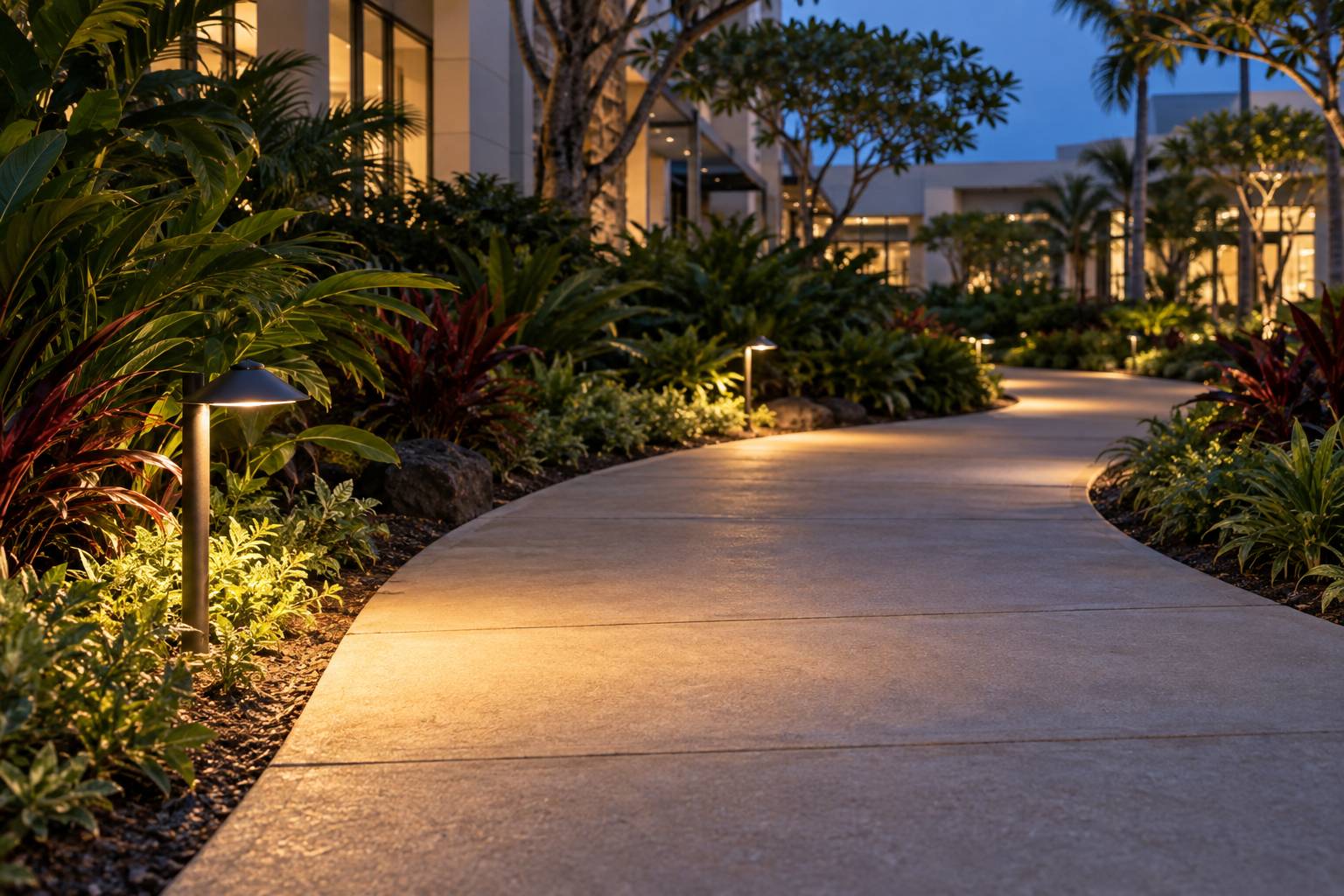

A residential lighting plan should start with what the homeowner wants to see after dark. A fixture selected for a walkway may not provide the intended effect on a planting bed. Accent lighting and general visibility also require different placement decisions.
The approved scope should identify the intended lighting objective for each area. It should not rely on a general instruction to illuminate the entire property.
Existing conditions influence whether a proposed layout can be installed as intended. We review the visible landscape and identify items requiring additional confirmation.
Visible conditions do not reveal every buried line or concealed component. Responsibility for additional locating or specialist review must be assigned when required.

More light is not always the right answer. A fixture aimed toward a window may create discomfort inside the home. Light directed beyond the intended feature can affect neighboring areas. Dense foliage can also produce uneven coverage or block the beam as plants mature.
We plan placement around the selected fixture and intended target. Beam characteristics and mounting position depend on the approved equipment. Field conditions may require adjustments, but those changes must remain within the authorized scope.
Landscape maintenance can affect lighting performance after installation. New growth may obstruct a fixture that was clear when the system was installed. A residential maintenance plan can identify whether vegetation near lighting equipment is included in ongoing care.
Cable length and connected load can affect the voltage delivered to fixtures in a low voltage system. For that reason, we do not assume that an existing transformer can support additional fixtures. Available equipment information must be reviewed before an expansion is approved.
The proposed system should be evaluated against the requirements of the selected components. We do not publish a universal cable length or fixture quantity because those decisions depend on the actual equipment and layout.
Work involving a line-voltage circuit is not automatically included in a low voltage landscape-lighting proposal. Panel work or other code-regulated electrical responsibilities must be identified and assigned appropriately before the affected work proceeds.

Lighting installation can overlap with planting beds and irrigation routes. Cable planning should consider visible irrigation components. The proposed path should also account for drainage areas or roots that may affect installation.
If lighting is part of a larger residential landscape installation, the cable route and fixture locations should be coordinated before final planting. This can reduce conflicts between the lighting layout and newly installed material.
Existing hardscape can change the scope. Crossing a paved area is different from routing through an accessible planting bed. Cutting or restoring hardscape is not assumed to be included unless it appears in the approved proposal.
Fixture suitability depends on where the equipment will be installed. Areas exposed to irrigation spray require a different review from protected locations. Coastal exposure may also influence the material selected for the project.
We confirm equipment only after the installation area and intended use are understood. Product availability must also be verified before scheduling. We do not guarantee a specific service life because site exposure and maintenance conditions vary.
A clear proposal distinguishes the approved low voltage work from related electrical or landscape responsibilities.
These boundaries help the homeowner understand what the proposal covers. They also prevent unrelated electrical or site work from being assumed after installation begins.
Equipment availability and scheduling are confirmed before installation. Changes to the layout or selected products require approval before they are implemented.
Landscape lighting may be one part of a larger property improvement. Explore our other residential services below. Each service receives its own approved scope unless the proposal states otherwise.
View the complete residential service overview
Plan planting and landscape improvements around the property
Complete approved planting and site preparation work
Define ongoing landscape care for the property
Remove approved landscape debris from the property
Address identified insect concerns or plant-disease conditions
Evaluate suspected coconut rhinoceros beetle activity
Possible locations depend on the property and approved layout. We review the intended coverage and visible site conditions before confirming fixture placement.
An existing system may be modified only after its known equipment and capacity have been reviewed. We do not assume that an existing transformer or cable layout can support additional fixtures.
Lighting can improve visibility in selected areas. It does not guarantee security or prevent unauthorized access. Security-specific requirements must be defined separately.
Low voltage lighting can be coordinated with a landscape installation when it is documented in the approved proposal. Equipment and routing requirements must be confirmed before the affected work begins.
Property exposure can influence equipment selection. We review the proposed installation area before confirming the products included in the scope.
Maintenance is included only when stated in an approved agreement. Vegetation management or fixture adjustments are not assumed to be part of a separate landscape maintenance package.
Pricing depends on the approved layout and selected equipment. Existing conditions or routing requirements can also affect the proposal. We confirm the scope before presenting project pricing.