Recognizing Possible CRB Activity

Adult coconut rhinoceros beetles bore into palm crowns. Damage can appear as affected fronds emerge. These signs justify review but do not establish a diagnosis.

Possible indicator What should be documented
V-shaped or scalloped cuts in emerging fronds Which fronds are affected and whether similar damage is present on nearby palms
Bore holes near the crown Location of the holes and whether fresh plant material is visible
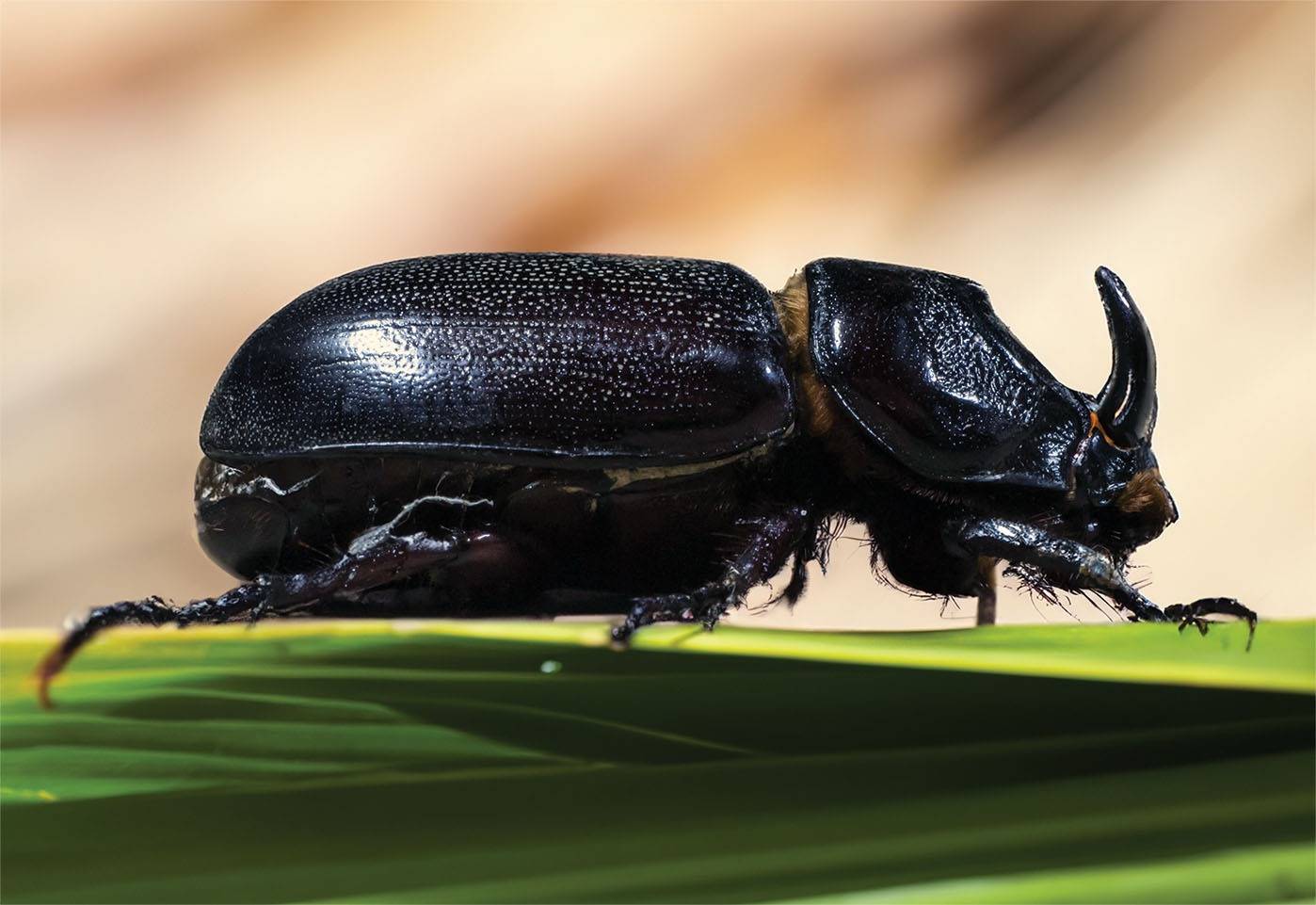
A black beetle with a horn A clear photograph and the location where the beetle was found
Large larvae in decaying organic material The material containing the larvae and its location on the property
General palm decline Other visible symptoms that may point to a different plant-health concern

CRB Hawaii identification and reporting guidance includes reference images. It currently states that Oahu residents do not need to report CRB, although the program can assist with identification. Homeowners should review the current page because instructions can change.

What We Review Before Defining the Scope

A CRB proposal should reflect the affected palm and site. Access or nearby organic material can change the work required.

Site consideration Why it matters
Palm species and condition Establishes the plant being evaluated and its visible level of damage
Crown and trunk access Affects inspection limits and whether a proposed method can be performed as scoped
Number and location of affected palms Defines the treatment area without assuming that every palm is included
Organic material near the palms Identifies possible breeding material that may require separate handling
Prior CRB work Helps us understand what treatment or removal has already occurred
Irrigation and nearby water Provides site context for any method applied around the root zone
Harvested coconuts Must be disclosed before a product is selected so its labeled uses can be reviewed

If the beetle or cause of damage cannot be confirmed during the approved visit, we do not present an assumption as a diagnosis.

Injection and Soil Drenching Options

Our CRB services may use injection or soil drenching. We consider the palm and site before confirming either method. The selected product label determines whether it can be used.

Treatment option How it enters the service scope
Injection Included only when the palm is suitable for the proposed application and the method is permitted by the product label
Soil drenching Included only when root-zone application is suitable for the site and permitted by the product label
Follow-up application Scheduled only when the proposal or a later authorization defines the timing and responsibility

We do not promise that one application will eliminate CRB activity. Treatment cannot restore tissue that is already damaged. Palm response depends on its condition and continued pest pressure.

Why Palm Treatment May Be Only Part of the Response

CRB management can involve more than a standing palm because the beetle breeds in decomposing plant material. Dead palm material or stumps may warrant review. The same applies to decaying landscape waste.
‍
CRB Hawaii treatment guidance states that no single treatment completely removes CRB from an area. Its approach addresses host palms and potential breeding material. Our scope identifies which of these property conditions are included.
‍
Routine maintenance does not automatically include CRB treatment or prevent beetle activity. Requested observation must identify the included palms and frequency in a residential landscape maintenance agreement or separate CRB scope.

Handling Potential CRB Breeding Material

Suspected breeding material should not be handled as ordinary green waste without reviewing current requirements. CRB Hawaii advises treatment before infested material is removed.
‍
Our proposal identifies any approved treatment or material movement. Palm removal and stump work require express inclusion. Hauling must also be defined. A related residential debris and waste removal scope can coordinate material removal with CRB requirements.
‍
Suspected infested material should be reviewed against current guidance before movement.

Product Labels and Property Instructions

If a pesticide application is proposed, the selected product must be labeled for the intended site and use. The Hawaii Department of Agriculture and Biosecurity pesticide guidance explains that label directions govern dosage and precautions. Required protective equipment also comes from the label.
‍
We do not describe an application as universally safe. Instructions involving residents or pets depend on the selected product label. Treatment-area access may require coordination.
‍
Before approval, the homeowner should disclose coconut harvesting for food and access constraints that could affect product selection.

Related Work Confirmed Separately

A written scope keeps related landscape needs from being mistaken for approved CRB work.

Complete elimination of CRB
No treatment can be presented as a guarantee that CRB will be removed from the property
Palm recovery
Treatment does not guarantee survival or restoration of existing damage
Palm removal
Requires written approval identifying the affected palm and removal responsibility
Stump work
Included only when the proposal identifies the stump and required handling
Debris hauling
Material removal requires an approved hauling and disposal scope
Repeat treatment
Included only when its timing and responsibilities are documented
Whole-property monitoring
The inspection area and visit frequency must be stated in the agreement
Unrelated disease control
Other plant-health concerns require their own evaluation and approved scope

These boundaries clarify what the homeowner is authorizing.

Our Residential CRB Service Process

Project stage What we confirm
Initial request Palm location and reported damage, including any beetles or larvae observed
Property review Visible palm conditions and potential breeding material within the approved area
Scope development Proposed treatment or removal work and stated exclusions
Service approval Selected method and included palms, plus label-directed property instructions
Scheduled work Site access and responsibilities that must be completed before service
Follow-up Only the observations or additional work stated in the agreement

No treatment result is guaranteed. Additional applications or removal work require authorization unless they are already included in the accepted proposal.

Residential CRB Removal and Treatment FAQs

What are common signs of coconut rhinoceros beetle damage?
Do I need to report a coconut rhinoceros beetle on Oahu?
Do you offer both injection and soil drenching?
Can one treatment eliminate CRB from my property?
Does CRB treatment include removing a damaged palm?
Can suspected breeding material be hauled away with other debris?
Is CRB treatment safe for residents or pets?
How is residential CRB service priced?
contact

Request Residential CRB Service on Oahu

Contact us if you have noticed possible beetle activity or palm damage at your Oahu home. We will identify the property information needed to define the review before treatment or removal work is scheduled.

Request a CRB Property Review
Office
Kapolei Trade Center, 2045 Lauwiliwili Street, Suite 702, Kapolei, Hawaii 96707
License
CT-35972