.svg)
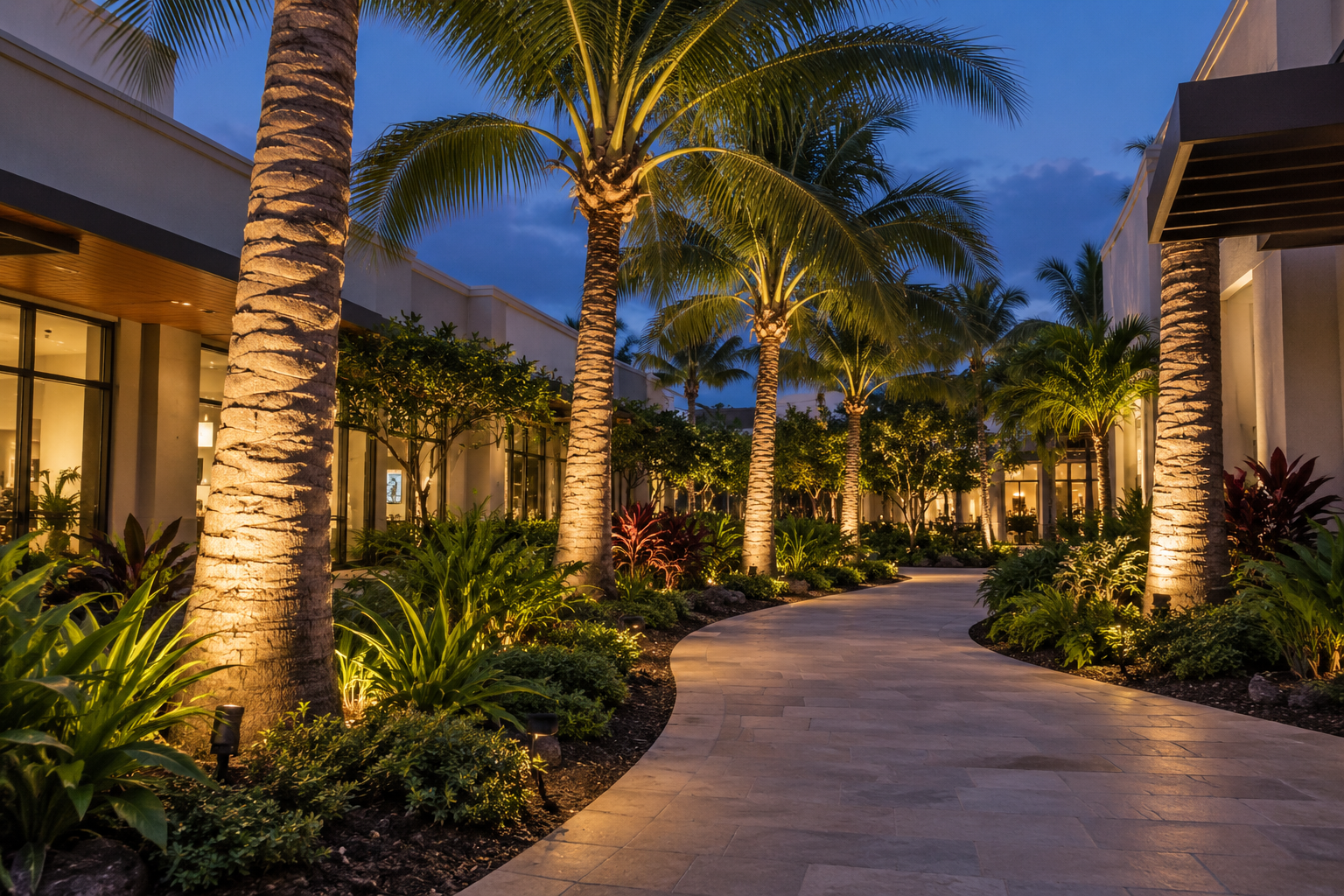
Evaluating a commercial property at ten in the morning provides an incomplete picture of its actual operational safety. Most property managers and HOA boards conduct their vendor walkthroughs during peak daylight hours. They assess the color of the turf, the height of the hedges, and the cleanliness of the parking lots. However, as the calendar moves toward the fourth quarter and daylight hours begin to shorten, the nighttime experience becomes a massive factor in tenant retention and premise liability.
A property that looks pristine at noon can transform into a high-risk environment by seven in the evening. Broken fixtures, obstructed pathway lights, and malfunctioning timers create dangerous dark zones for retail shoppers and resort guests. Pacific Island Landscape conducts comprehensive nighttime audits to identify these specific vulnerabilities. We evaluate how your property actually functions after the sun goes down. This checklist breaks down exactly what a daylight walkthrough misses and how to secure your property using modern low-voltage systems.
Identifying Uneven Coverage and Dark Zones
The primary function of commercial lighting is pedestrian safety. Resort guests navigating pool decks and retail shoppers walking to their vehicles require consistent, even illumination. Daylight audits completely fail to reveal dead bulbs or tripped circuit breakers.
When a property manager walks the site after dark, the gaps in coverage become immediately obvious. A single burnt-out bulb on a critical staircase creates a severe trip hazard. When multiple pathway fixtures fail in a row, it forces pedestrians to walk through unlit zones. These dark areas actively invite security risks and expose the property owner to expensive liability lawsuits.
Our technicians map the precise lumen output across your active pedestrian routes. We identify areas where shadows from newly installed hardscaping or relocated trash enclosures have compromised the original lighting design. We replace dead halogen bulbs with high-efficiency LED alternatives to restore immediate safety to these dark zones.
The Problem with Obstructed Fixtures
Landscape lighting systems do not exist in a static environment. Plants grow continuously. A lighting designer might install a brilliant uplight at the base of a young palm tree. Five years later, the surrounding Naupaka shrubs have completely engulfed the fixture. The light is still burning electricity, but the thick foliage traps the illumination entirely.
Daylight walkthroughs rarely catch this issue. A groundskeeper trimming hedges at noon is focused on the shape of the plant, not the location of the buried lighting fixture.
During a nighttime audit, our crews easily identify which lights are trapped beneath overgrown vegetation. We resolve this conflict by coordinating directly with our pruning teams. We execute targeted structural pruning to clear the space around the fixture. If pruning compromises the aesthetics of the plant, we physically relocate the light. Moving a low-voltage fixture two feet forward frequently restores its full architectural impact without requiring expensive equipment upgrades.
Addressing Glare and Light Pollution
More light does not automatically equate to better security. Improperly aimed fixtures create severe glare. When an uplight is knocked out of alignment by a passing lawnmower, the beam can shine directly into the eyes of passing drivers or pedestrians.
This glare causes temporary night blindness. It makes navigating a busy retail parking lot or a steep HOA driveway significantly more dangerous than having no light at all. Furthermore, misaligned lights frequently shine directly into first-floor resort windows or condominium bedrooms. This specific nuisance generates immediate complaints from guests and residents.
We correct these alignment issues meticulously. Our teams adjust the shrouds on directional spotlights to contain the beam exactly where it belongs. We utilize frosted lenses to soften harsh lumen output near seating areas. We ensure the illumination highlights the architectural features of the property without blinding the people attempting to enjoy it.

Upgrading Outdated Control Systems
Commercial lighting relies on automated control systems to manage daily operations. Older properties frequently utilize mechanical timers to activate their exterior lights. These mechanical timers are highly vulnerable to power surges and brief electrical outages.
When the power blinks on Oahu, a mechanical timer stops ticking. The entire lighting schedule drifts off target. Suddenly, a retail center's security lights are turning on at two in the afternoon and shutting off at nine at night. The property manager is left paying for electricity during the day while leaving the property completely dark during actual business hours.
We replace unreliable mechanical timers with modern astronomical controls and photocell sensors. A photocell physically detects the presence of ambient light. It turns the system on precisely at dusk and off precisely at dawn, regardless of the time of year or minor power interruptions. This simple upgrade eliminates the need for a facilities manager to manually adjust the timers every time the season changes.
| Lighting Vulnerability | Daylight Assumption | Nighttime Reality |
|---|---|---|
| Dead Fixtures | Assuming all visible housings contain working bulbs. | Dark zones create severe trip hazards on stairs and paths. |
| Overgrown Plants | Assuming the original lighting design is still effective. | Mature shrubs block the lumen output entirely. |
| Misaligned Housings | Assuming fixtures remain perfectly angled. | Uplights shine directly into pedestrian eyes, causing glare. |
| Drifting Timers | Assuming the mechanical timer is accurate. | Lights operate during the day and shut off at night. |
The Efficiency of Low-Voltage LED Upgrades
If your commercial property still operates on standard halogen bulbs, you are losing money every month. Halogen systems consume massive amounts of electricity. They burn extremely hot, which degrades the internal wiring and plastic housings rapidly. They also require constant labor to replace short-lived bulbs.
Pacific Island Landscape specializes in retrofitting commercial properties with low-voltage LED technology. LED fixtures consume roughly eighty percent less electricity than their halogen counterparts. They do not generate damaging heat. They last for tens of thousands of hours, drastically reducing your annual maintenance labor costs.
Upgrading to a low-voltage system also mitigates voltage drop across expansive commercial properties. Voltage drop causes the lights at the end of a long wire run to appear dim and yellow. Our technicians calculate the precise wire gauge and transformer capacity required to ensure every single light on your property shines with uniform brightness.
Request a Commercial Lighting Review
Protecting your guests, tenants, and brand reputation requires visibility. Do not rely on daylight inspections to secure your property. You need a dedicated partner to identify and correct your exterior lighting failures.
Pacific Island Landscape holds Hawaii contractor license CT-35972. We possess the technical expertise to audit, repair, and upgrade complex commercial illumination systems. We invite property managers, retail directors, and HOA boards to schedule a targeted lighting evaluation. Review our complete capabilities on our commercial tree trimming and low-voltage lighting page. Please submit your facility details through our contact page to begin securing your property after dark.

.svg)