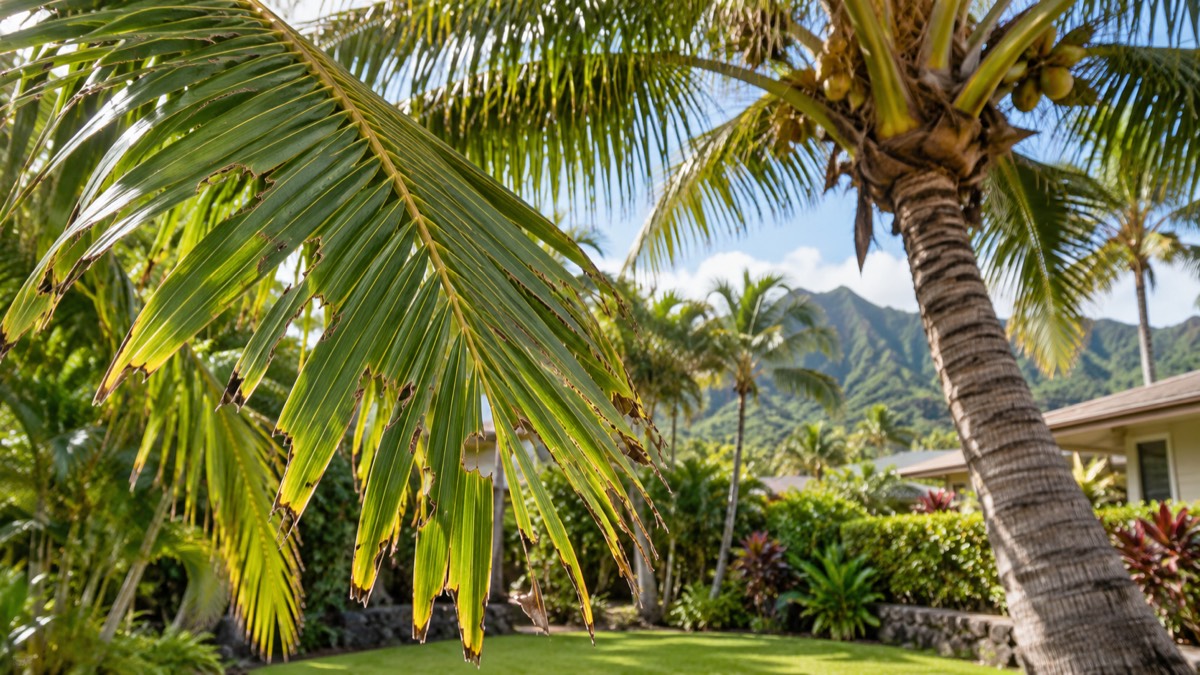
Have you noticed V-shaped cuts in your coconut palm fronds or unusual damage near the crown? These could be signs of coconut rhinoceros beetle (CRB) activity, a serious concern for residential and commercial landscapes across Oahu. Since its first detection on the island in December 2013, this invasive pest has spread, threatening coconut palms and other susceptible trees. Repeated beetle feeding can weaken palms, damage developing leaves, and eventually kill severely affected trees.
At Pacific Island Landscape, we provide coconut rhinoceros beetle treatment on Oahu using palm injection and soil-drench methods as part of our commercial landscaping services. Whether you're maintaining palms at home or managing a larger property, understanding CRB damage and available treatment options can help you make informed decisions.
How to Identify Coconut Rhinoceros Beetle Damage
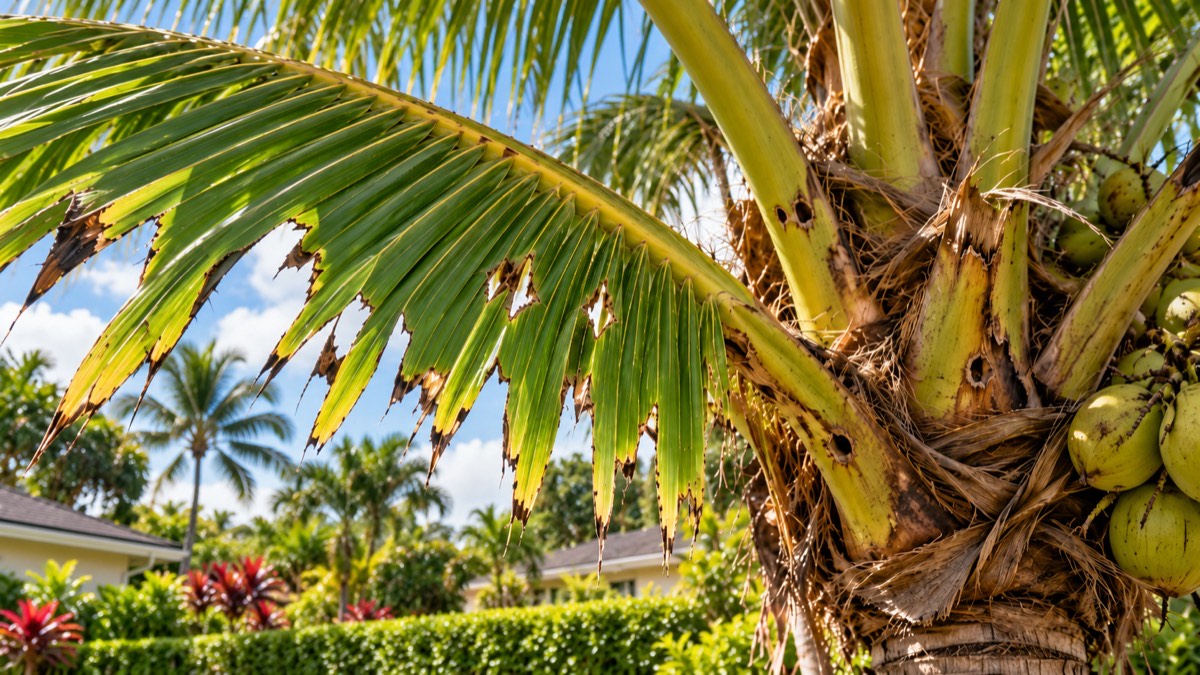
Coconut rhinoceros beetles damage palms by boring into the crown, where new leaves develop. They feed on soft growing tissue, leaving injuries that become visible as the fronds unfold. Because this damage often appears after the beetle has finished feeding, it's important to recognize the warning signs and monitor new growth.
Common signs of CRB activity include:
- V-shaped cuts: Distinctive triangular notches appear along newly opened palm fronds.
- Bore holes: Entry holes near the crown may indicate beetle feeding.
- Frass accumulation: Chewed plant material can collect around entry points.
- Damaged new growth: Emerging fronds may appear distorted, torn, or unable to open normally.
- Declining palm health: Repeated attacks can interfere with healthy growth and eventually damage the growing point.
According to the Hawaii Department of Agriculture and Biosecurity, CRB primarily attacks coconut palms but can also damage other palm species. However, not all palm damage comes from beetles. Nutrient deficiencies, plant diseases, and environmental stress can produce similar symptoms, making proper identification important before selecting treatment.
Why CRB Infestations Are a Serious Concern on Oahu
A few damaged fronds do not necessarily mean a palm is dying, but repeated beetle feeding can become a serious problem. Adult CRB enter palm crowns to feed, sometimes returning to the same tree or moving between nearby palms. Continued feeding can damage new leaves and potentially injure the palm's growing point, making CRB more than a cosmetic landscaping issue.
Even when one affected palm receives treatment, beetles may continue arriving from neighboring properties. A tree showing old damage may no longer contain beetles, while another palm without visible symptoms could already be experiencing feeding activity. For this reason, effective CRB management should consider the surrounding landscape, not just individual damaged trees.
Why Removing Breeding Sites Matters as Much as Treating Palms

Treating affected palms addresses feeding beetles, but CRB populations also depend on suitable places to reproduce. Female beetles lay eggs in decomposing organic material, where larvae develop before emerging as adults. This means a property can have beetles feeding in its palms while additional beetles develop in nearby landscape waste.
Common breeding sites include:
- Piles of fallen palm fronds
- Rotting palm trunks and stumps
- Green waste and landscape clippings
- Compost piles
- Accumulations of decomposing mulch
Removing or appropriately treating breeding material helps reduce conditions that support new beetle populations. However, disposal requires care because moving infested green waste without proper processing can spread beetles to other locations. The CRB Response Hawaii treatment guidance emphasizes managing breeding material alongside palm treatments.
For homeowners and property managers, keeping landscape debris under control is an important preventive measure. Potentially infested material should be handled according to current local recommendations rather than simply relocated to another area.
Professional Coconut Rhinoceros Beetle Treatment Options

Professional CRB management may involve chemical treatments, physical protection methods, and breeding-site management. The appropriate approach depends on the condition of the palms, available treatment products, and surrounding property conditions. At Pacific Island Landscape, our published CRB treatment methods include palm injection and soil drenching.
Palm Injection Treatment
Palm injection introduces a systemic insecticide directly into the palm, allowing the active ingredient to move through the tree's tissues and affect adult beetles when they feed. Research conducted in Hawaii has shown promising results from certain systemic injections, particularly when treatment is coordinated across multiple palms.
However, this method has limitations. Beetles must feed on treated tissue to encounter the insecticide, meaning some damage can still occur. The appropriate product, application method, and retreatment requirements depend on the specific palm and pesticide label.
Soil Drench Treatment
Soil drenching involves applying an appropriate systemic insecticide around the palm's root zone, allowing the plant to absorb the treatment. This method provides another option for managing CRB, although effectiveness depends on the product and application conditions.
CRB Response Hawaii notes that field effectiveness for some soil-drench treatments has not been established to the same degree as certain injection methods. Environmental restrictions also matter, particularly near bodies of water. Both treatment methods must follow applicable pesticide labels and Hawaii requirements, including any restrictions intended to protect pollinators and prevent unsafe consumption of treated fruit.
Neither method guarantees permanent beetle elimination. You can learn more about the differences through the CRB Response Hawaii palm treatment guide.
What Homeowners Should Do When They Find CRB Damage
If you discover suspicious damage on a palm at your Oahu home, several practical steps can help you understand the situation before arranging treatment.
Examine New Palm Growth
Look for fresh cuts or holes on newly emerging fronds. Older damaged leaves will not repair themselves, so visible cuts are not always evidence of ongoing beetle activity. Taking photographs over time can help you recognize whether additional damage is appearing. Avoid climbing tall palms or attempting to inspect unstable crowns yourself.
Check Nearby Organic Material
Inspect accessible areas containing decomposing palm debris, old stumps, or large accumulations of mulch. CRB larvae are pale, curved grubs with brown heads, but other beetle larvae can look similar. If you suspect breeding activity, seek appropriate identification and handling advice before disturbing the material.
Avoid Moving Potentially Infested Debris
Do not relocate suspected infested materials to another property without following recommended treatment or disposal procedures. Even when adult beetles are not visible, eggs or larvae may remain inside decomposing material. Careful handling helps prevent the accidental spread of CRB.
Discuss Suitable Treatment Options
If damage continues, speak with a qualified CRB treatment provider about the condition of your palms. Ask which treatment methods are appropriate, what limitations apply, and whether nearby palms or breeding conditions also need attention.
How to Prevent Future Coconut Rhinoceros Beetle Problems
Although no single measure completely eliminates CRB risk, regular landscape care can help reduce opportunities for beetles to reproduce. Prevention should focus on managing organic materials, checking new palm growth, and addressing potential breeding conditions before they become more extensive.
- Manage landscape debris: Avoid allowing dead palm fronds, rotting wood, and large piles of decomposing organic material to accumulate.
- Inspect incoming materials: Mulch, compost, and other organic landscape products may carry CRB life stages. Ask suppliers about their inspection and prevention practices.
- Monitor new fronds: Check emerging palm growth for fresh damage rather than relying only on old cuts.
- Address nearby breeding conditions: If neighboring properties contain suitable breeding materials, coordinated management may help reduce the local beetle population.
- Follow official disposal guidance: Proper treatment and processing of potentially infested materials can help limit further spread.
These practices are particularly useful on properties with multiple palms or ongoing landscape maintenance needs. CRB Response Hawaii recommends combining palm treatments with green waste management and community coordination rather than relying exclusively on treatment of individual trees.
Choosing a CRB Treatment Provider on Oahu
Before selecting a company for coconut rhinoceros beetle treatment, make sure you understand what the service includes. A qualified provider should be able to explain how they identify CRB activity, which methods are appropriate for your palms, and what results you can reasonably expect.
Important questions to ask include:
- How will the provider determine whether CRB is responsible for the damage?
- Which treatment methods are suitable for the affected palms?
- What pesticide qualifications and restrictions apply?
- How should nearby breeding materials be managed?
- Will additional observation or treatment be necessary?
Be cautious of providers promising guaranteed elimination after one application. CRB can move between properties, and treating an individual tree does not necessarily eliminate beetles from the surrounding area. A responsible treatment discussion should explain realistic expectations and help you understand what is appropriate for your landscape.
Ask About CRB Treatment on Oahu
Coconut rhinoceros beetles can cause significant palm damage when feeding continues unchecked. Recognizing the warning signs, managing potential breeding sites, and choosing suitable treatment methods can help reduce the risk of further damage.
At Pacific Island Landscape, we offer CRB injection and soil-drench treatments alongside our commercial landscape maintenance and debris removal services on Oahu. If you're managing a commercial property with suspected CRB damage, contact us to request an estimate or call (808) 347-4462 to discuss your landscape needs.
For residential CRB treatment inquiries, please contact us to confirm service availability.