Losing a favorite coconut palm to the coconut rhinoceros beetle (CRB) can really change the look and feel of your yard. Mature palms offer great shade, framed entryways, and that iconic island charm we all love on Oahu.
When it comes time to take one down, choosing what to plant next involves a bit more than simply picking out a new tree.
Before you dig in, it helps to check on the remaining stump, soil health, irrigation lines, and any ongoing beetle activity around the yard.
Here at Pacific Island Landscape, we work with homeowners and properties across Oahu on landscape design, planting, and CRB control. We also grow trees and plants at our local nursery in Kapolei to support our landscape projects.
Here are a few helpful things to keep in mind when planning your new landscape after dealing with CRB damage.
Do You Need to Replace a Damaged Palm Right Away?
Just because a palm shows signs of beetle damage does not always mean it needs to come down right away.
Adult beetles bore into the crown to feed on young fronds, which creates those distinctive V-shaped notches as the leaves unfurl.
As long as the main growing tip remains healthy, many palms can actually push through the damage and keep growing.
However, if the growing heart of the tree is severely damaged, growth stops entirely.
Experts suggest taking a moment to evaluate living palms before rushing to remove them.
Before making replacement plans, check whether the tree can recover or if removal is the safest option.
If a declining palm sits close to your home, driveway, or outdoor living space, it is best to have it inspected for safety.
Our team can help assess your tree through our residential CRB evaluation and treatment services. If full removal is necessary, we can outline those specific steps with you as well.
Step 1: Taking Care of the Tree and Stump
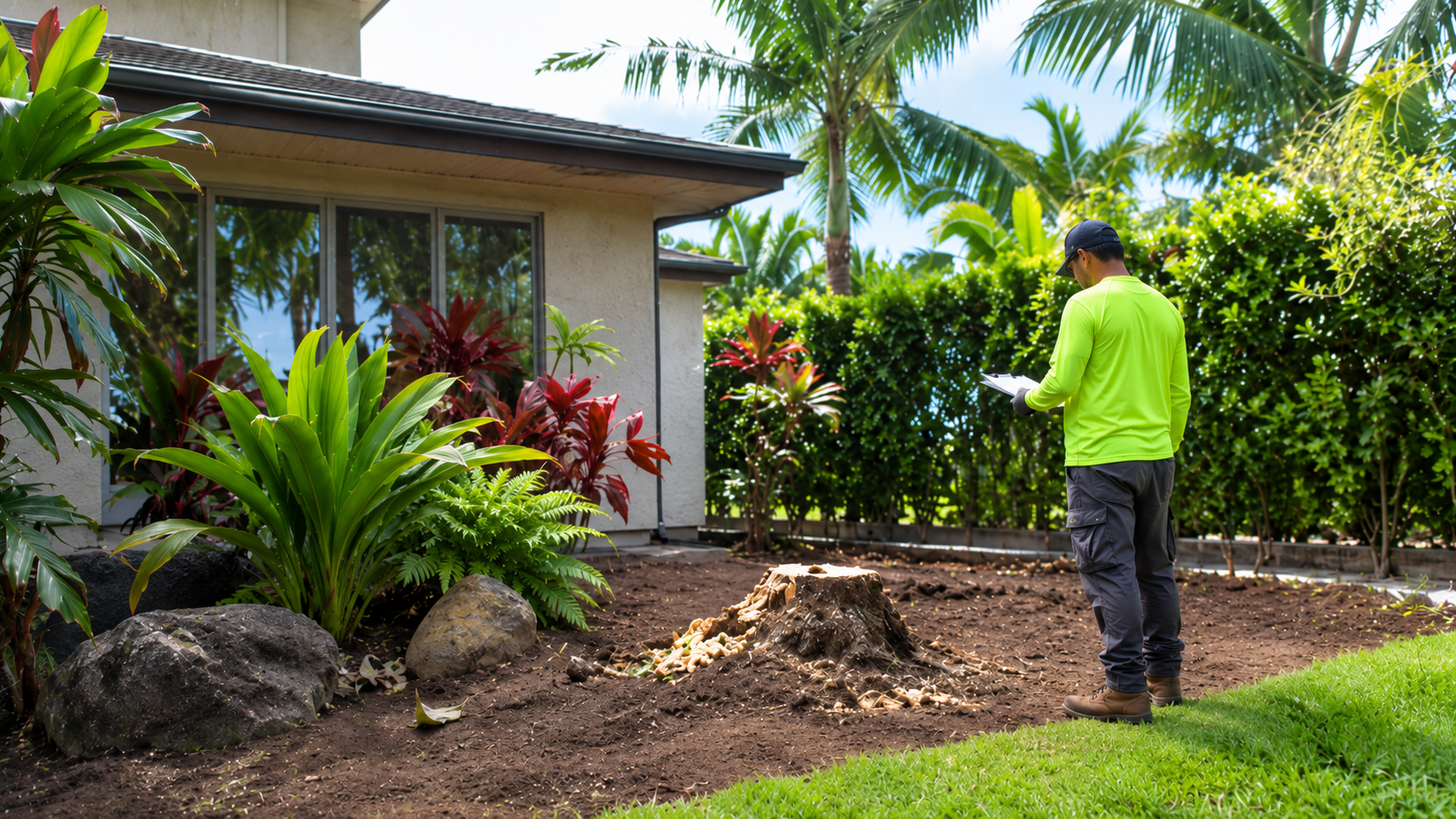
If removal makes the most sense, the next step is deciding what to do with the stump and green waste.
Cutting down a tree does not automatically mean the stump gets ground out or the roots are removed.
Depending on your yard, these extra tasks might need to be planned separately.
Why proper stump removal is so important
CRB grubs love decomposing plant material, especially decaying palm stumps and old mulch piles.
Leaving rotting tree material around your property can accidentally create a cozy breeding spot for beetles.
Before starting work, make sure to clarify:
- Whether the stump will be left behind or ground down below soil level
- How green waste and palm debris will be hauled away
- If potential breeding material needs to be treated first
- What soil prep is necessary before putting a new tree in the ground
Any material infested with grubs should be treated properly before moving or disposing of it.
We offer tree removal, stump grinding, and full landscape debris removal services tailored to what your yard needs.
Step 2: Should You Plant Another Palm or Try Something New?
Replacing your coconut palm with another one is often the first thought, especially if it was a main focal point of your garden.
Keep in mind that CRB is still active across Oahu.
Planting another susceptible palm means you will want to stay proactive with pest management.
Think about what you liked best about your original tree.
Did it provide shade, frame your driveway, add a lush tropical vibe, or anchor a garden bed?
Knowing its main purpose makes it easier to choose whether another palm or a different shade tree is the best fit.
When another palm is a great fit
Going with a new palm makes sense if that classic silhouette is essential to your overall landscape style.
Just be sure to consider beetle susceptibility, available growing room, and ongoing care needs when picking out the species.
A new palm will benefit from periodic checkups and preventive CRB treatments.
When to explore other tree varieties
A non-palm broadleaf tree can bring beautiful shade and natural structure without attracting beetle damage.
The right choice depends on your microclimate—taking into account sun exposure, wind patterns, soil depth, and nearby structures.
For tighter planting spots, pay close attention to mature canopy size so your new tree does not crowd walkways or rooflines down the road.
Focusing on how the tree will grow over time ensures it stays healthy and manageable for years to come.
Step 3: Checking Your Site Conditions Before Planting
The spot where your old palm stood usually needs a little preparation before a new tree can thrive.
Grinding a stump loosens up surrounding soil, while old root mass, sprinkler lines, or underground utilities can affect your planting plan.
Here is a quick checklist of things to review on-site:
Checking these details ahead of time makes it easy to adjust irrigation lines or soil conditions during installation.
Through our residential landscape installation services, we handle everything from site prep to final planting.
If your project involves complex structural work or utility lines, we can coordinate smoothly with qualified local professionals.
Step 4: Picking the Right Plants for Your Oahu Yard
Microclimates on Oahu vary quite a bit from neighborhood to neighborhood.
Coastal yards deal with salty ocean breezes and strong trade winds, while inland locations might get extra rainfall or intense afternoon sun.
A plant that flourishes in one garden might struggle in another just a few miles away.
Selecting a replacement tree that complements your existing plants helps keep your landscape cohesive.
Planning for mature size and ongoing care
Before choosing your new tree, keep these factors in mind:
- Full height and canopy width at maturity
- Room for root growth below ground
- Watering and drip irrigation needs
- Tolerance for salt spray and trade winds
- Distance from roofs, structures, and walkways
- Regular pruning and maintenance requirements
Taking time to think through these details ensures a smooth transition, especially when replacing a large palm with a different tree type.
How our Kapolei nursery helps
We grow a variety of specimen trees and tropical plants at our private landscape nursery in Kapolei.
Having our own nursery gives us access to healthy, locally acclimated plants for residential homes and commercial properties alike.
We always double-check nursery inventory to ensure species and sizes are ready for your project schedule.
If you are working with a landscape architect, we are always happy to collaborate and bring their vision to life.
Step 5: Caring for Your New Tree After Installation
Getting your new tree into the ground is just the beginning of establishing a vibrant landscape.
Newly planted trees need consistent watering and regular care while their root systems settle in.
If you decide to plant another palm, keeping an eye out for CRB remains an important routine since beetles fly between properties.
The Hawaii Department of Agriculture and Biosecurity recommends inspecting host palms regularly and keeping compost or green waste piles covered and treated.
For non-palm trees, care focuses primarily on proper watering, mulching, and light structural pruning as the tree grows.
If you would like ongoing help, our estate landscape maintenance team is happy to assist.
What Influences Palm Replacement Costs on Oahu?
The cost to replace a CRB-damaged palm depends on several project steps beyond purchasing the new tree.
Here are the key factors that go into a replacement estimate:
- Removing the existing palm safely
- Stump grinding and proper waste disposal
- Soil preparation and site conditioning
- Chosen tree species and plant maturity size
- Site access for machinery or large trees
- Sprinkler and drip line adjustments
- Follow-up care and maintenance needs
Planting a young container tree involves different logistics than installing a mature palm specimen.
Because every property is unique, we tailor our estimates to your specific site needs rather than offering flat pricing.
We always review the proposal with you so you know exactly what is included—from removal to site prep and final planting.
Ready to Plan Your Replacement Landscape?
When a palm needs to be removed due to CRB damage, your new tree should look great and thrive in your space for years to come.
Good site prep, choosing the right plant, and setting up proper care make all the difference.
Our team at Pacific Island Landscape is here to help with design, site prep, and planting for residential homes and commercial properties across Oahu.
If you are looking to replace a damaged coconut palm, we would love to walk your property with you and share suitable tree options.
Get in touch with Pacific Island Landscape or call us at 808-347-4462 to set up an on-site consultation and estimate.