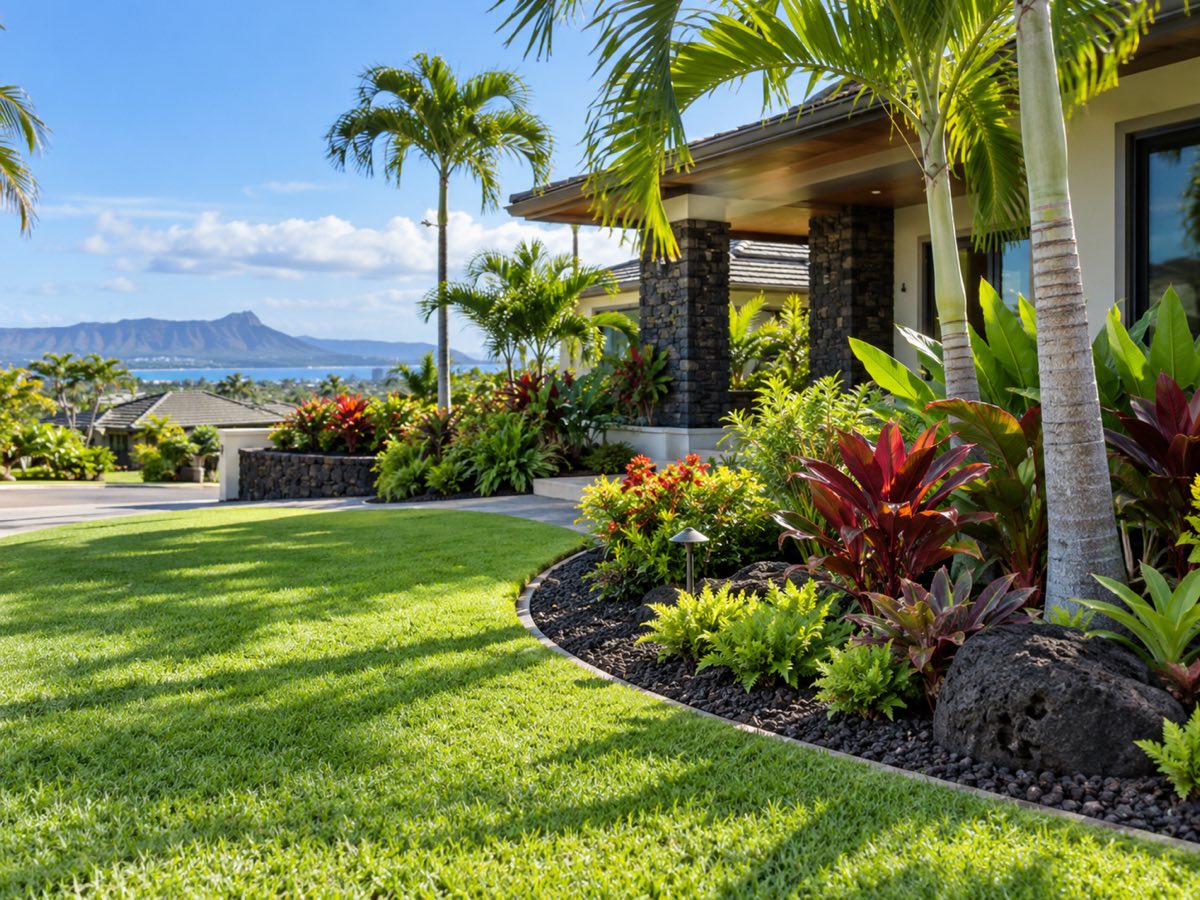
A planting bed that works well on a mainland property may struggle in Hawaii. Heavy rainfall, coastal winds, intense sunlight, and changing soil conditions can affect how plants establish and grow.
On Oahu, successful planting bed installation starts with the property itself. A planting area in rainy Kailua may need different drainage and irrigation planning from a sun-exposed garden in Waianae.
Whether you're creating ornamental planting areas, improving an established landscape, or planning raised vegetable beds, understanding these conditions helps you make better decisions before installation.
Why Planting Beds in Hawaii Need Site-Specific Planning
Oahu's growing conditions vary considerably across the island. Windward locations generally receive more rainfall than leeward areas, while exposed coastal properties also experience salt spray and persistent winds.
These differences affect where planting beds should go, how soil is prepared, and which plants are suitable.
Three conditions deserve particular attention:
- Rainfall and drainage: Excess moisture can contribute to waterlogged soil and root problems, especially where runoff collects.
- Sun and wind exposure: Direct afternoon sunlight can stress sensitive plants, while constant wind increases moisture loss.
- Soil conditions: Soil texture, drainage, acidity, and nutrient availability vary by property. Volcanic origin does not mean every Oahu garden has the same soil.
Before choosing materials or plants, observe how the site behaves during both wet and dry conditions.
Choosing the Right Location and Bed Dimensions
Start by identifying how much sunlight the intended planting area receives throughout the day.
Many vegetables benefit from approximately six to eight hours of direct sunlight, although leafy greens may need protection from intense afternoon exposure. Ornamental plants have different requirements depending on the species.
Avoid placing beds where rainwater regularly collects unless the drainage issue is addressed.
For sloped properties, consider how runoff moves downhill. Planting beds should not unintentionally direct water toward buildings, pathways, or neighboring areas.
How Wide and Deep Should Your Planting Bed Be?
Dimensions depend on the plants, available space, and maintenance access.
For raised vegetable gardens, a four-foot width is a practical starting point when the bed is accessible from both sides. This allows gardeners to reach the center without stepping on growing soil.
University of Hawaii's Oahu Master Gardeners provide these general recommendations:
| Feature | Practical guidance |
|---|---|
| Bed width | Approximately 4 feet when accessible from both sides |
| Rooting depth | 6–12 inches for many plants; 18–24 inches preferred for deeper-rooted vegetables |
| Pathways | Allow comfortable access for planting and maintenance |
| Bed length | Adjust to available space and irrigation layout |
These are gardening guidelines, not universal construction specifications. Larger ornamental beds require spacing based on mature plant size, root development, and landscape design.
For additional guidance, see the Oahu Master Gardeners' raised-bed gardening resource.
Selecting Materials for Hawaii's Climate
Raised-bed materials must withstand moisture, sunlight, and the site's exposure conditions.
Common options include:
- Cedar or redwood: Naturally more resistant to decay than many untreated softwoods, although lifespan depends on local conditions.
- Composite materials: Can reduce some wood-decay concerns, but products must be suitable for the intended exposure and structural use.
- Metal beds: Provide a different appearance and construction approach, although corrosion resistance matters near the coast.
- Concrete blocks or stone: Can create permanent-looking planting boundaries, but weight, drainage, and potential effects on soil pH should be considered.
For ground-level ornamental beds, a raised frame may not be necessary. Defined planting edges, suitable grading, and prepared soil may provide a better fit.
Before construction, remove unwanted vegetation, check for buried utilities, and confirm that the finished bed will not interfere with existing irrigation or drainage.
Where a project involves significant grading or drainage affecting structures, additional professional evaluation may be required.
Preparing Soil for Healthy Plant Growth
Good soil preparation matters as much as the bed structure.
There is no single soil recipe suitable for every Hawaii property. A mixture that drains too quickly may require frequent watering in dry locations, while one that retains excessive moisture can cause problems in wetter areas.
Start by evaluating the existing soil rather than assuming it must all be replaced.
What Should Go Into a Planting Bed?
Depending on the site and intended plants, soil preparation may involve:
- Existing topsoil: Reuse suitable soil when practical.
- Compost: Improve organic matter and some soil characteristics.
- Drainage amendments: Consider appropriate materials where the existing soil structure requires adjustment.
- Fertilizer: Apply according to the plants' requirements and soil-test results.
A soil test can identify acidity and nutrient conditions before amendments are selected.
The University of Hawaii's Soil Nutrient Testing and Analysis service provides testing information and soil-sampling guidance.
Avoid adding large amounts of fertilizer or compost simply because the soil looks poor. Excessive amendments can create their own growing problems.
For larger landscape projects, we consider planting-area preparation alongside the approved grading, irrigation, and planting requirements. Our residential landscaping services are organized around property-specific conditions and clearly defined work.
Choosing Plants for Year-Round Oahu Gardens
Hawaii's warm climate creates opportunities for planting throughout much of the year, but not every species performs equally well in every season or location.
For edible gardens, tomatoes, peppers, eggplant, leafy greens, and sweet potatoes are among the crops homeowners may consider. Individual varieties differ in their tolerance for heat, moisture, and pests.
Cooler periods may favor certain leafy vegetables, while warm-season crops still require appropriate irrigation and disease management.
Ornamental planting beds require a different approach.
We consider mature plant size, intended appearance, maintenance requirements, and site exposure when planning landscape improvements.
For properties incorporating mature trees, privacy hedging, or architectural specimens, our private Kapolei nursery can support plant selection when suitable material is confirmed in inventory.
Plant type, size, and availability are reviewed for each project.
Managing Pests and Plant Diseases
Warm temperatures and moisture can encourage pest activity and some plant diseases.
Good planting-bed design helps reduce avoidable problems, particularly when it provides suitable spacing and prevents persistent moisture around roots.
Practical measures include:
- Leaving enough space for plants to reach their expected mature size.
- Inspecting leaves and stems for discoloration, insects, or unusual growth.
- Removing weeds and plant debris when appropriate.
- Avoiding unnecessary overhead irrigation that keeps foliage wet.
- Using suitable physical protection where animals damage young plantings.
Companion plants such as marigolds or basil can add variety to a garden, but they should not be treated as reliable substitutes for pest identification and management.
If symptoms appear, identify the likely cause before selecting a treatment. Water stress, drainage problems, insects, and disease can produce similar visible symptoms.
Our residential disease-control services include reviewing plant-health concerns and defining appropriate treatment work where supported by the assessment.
Irrigation and Maintenance After Installation
A planting bed needs ongoing attention after construction.
Water requirements depend on the season, rainfall, plant selection, soil moisture, and exposure. Windward properties may need less supplemental irrigation during wet periods, while dry or exposed areas can require more frequent monitoring.
Drip irrigation or other root-zone watering methods can help keep unnecessary water off foliage. The University of Hawaii's gardening guidance also recommends avoiding waterlogging and minimizing leaf wetness where possible.
After installation:
- Check soil moisture before adjusting irrigation.
- Inspect drainage following heavy rainfall.
- Monitor plant growth for signs of stress or overcrowding.
- Maintain soil condition with amendments when needed.
- Review irrigation coverage as the planting matures.
For larger residential landscapes, ongoing care may include irrigation monitoring, plant care, and approved maintenance activities.
We offer residential landscape maintenance through property-specific agreements, with responsibilities established in the accepted scope.
Plan Your Oahu Planting Bed With the Property in Mind
Successful planting bed installation in Hawaii involves more than selecting attractive plants and adding new soil.
Drainage, sunlight, exposure, access, and long-term maintenance all influence the finished landscape.
At Pacific Island Landscape, we help Oahu property owners plan and install landscape improvements around actual site conditions. We can coordinate planting work with irrigation and related landscape preparation when those services are included in the approved proposal.
If you're planning new planting areas for an estate, residential renovation, or commercial property, request a landscape quote or call 808-347-4462 to discuss your property and arrange the appropriate next step.
Pacific Island Landscape | Hawaii Contractor License CT-35972