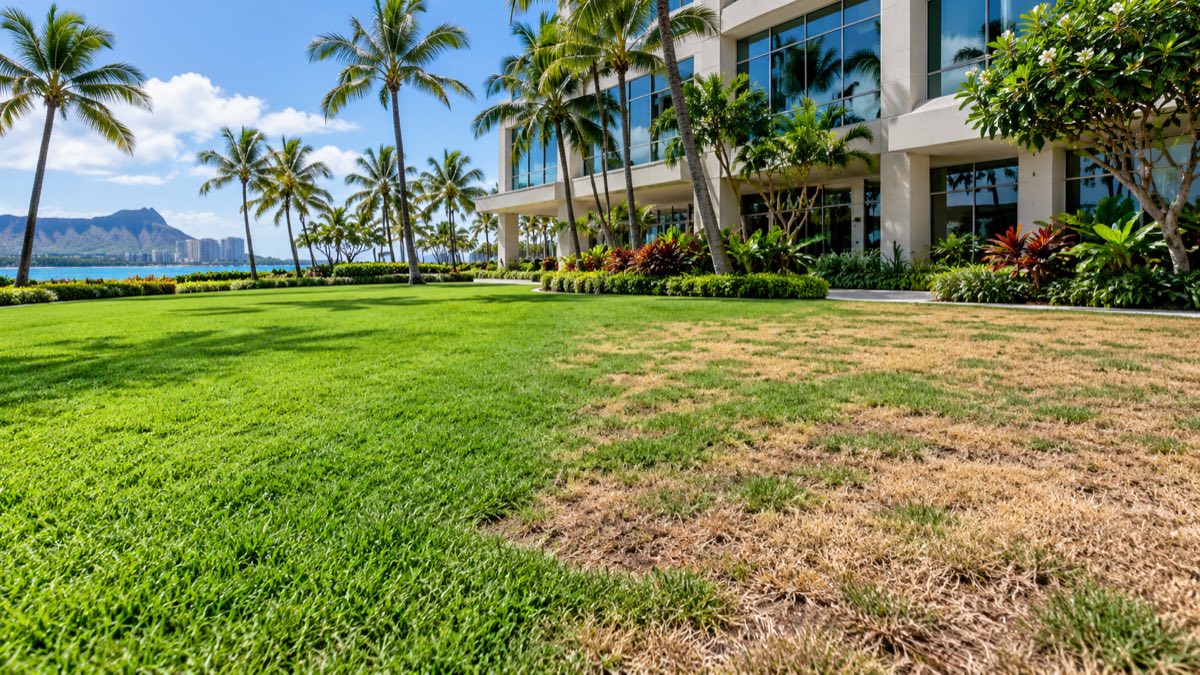
A neglected lawn can change the appearance of an entire commercial property. Brown patches around an office building, weeds spreading through a shopping center's green spaces, or thinning grass near a hotel entrance can make otherwise maintained grounds look overlooked.
On Oahu, restoring damaged grass involves more than mowing it shorter or applying fertilizer. Tropical growing conditions, varying rainfall, soil problems, and turfgrass pests make the cause of deterioration as important as its appearance.
At Pacific Island Landscape, we provide commercial landscape installation, maintenance, and plant health services on Oahu. Our work includes irrigation and drainage installation, sod plugs, hydro mulch, and landscape debris removal.
For property managers dealing with neglected turf, the first decision is whether existing grass can recover or the affected area needs more extensive landscape improvements.
When Does a Neglected Lawn Need Restoration?
Not every brown patch requires replacing the lawn. Some areas improve after correcting irrigation or maintenance problems. Others have deteriorated enough that routine mowing and fertilization will not produce meaningful recovery.
Persistent Brown or Yellow Patches
Grass that remains discolored despite regular watering may be experiencing fungal disease, root damage, poor drainage, or nutrient stress. Brown patch, caused by Rhizoctonia solani, is one disease found in Hawaii turfgrass. Warmth, humidity, and excessive thatch can favor disease development. However, brown grass does not automatically mean infection. Identifying the cause helps avoid unnecessary applications and repeated damage.
Bare Soil and Expanding Weed Coverage
When grass becomes thin, exposed soil gives weeds an opportunity to establish. Crabgrass, broadleaf weeds, and sedges may compete with desirable turfgrass. Cutting weeds back can improve appearance temporarily but does not correct the conditions allowing them to spread. Where substantial healthy turf remains, recovery may be possible. Large bare sections may call for reestablishment.
Compacted Soil and Standing Water
Commercial lawns can experience repeated foot traffic and maintenance equipment use.
Compaction may restrict water and air movement. Warning signs include puddling after irrigation, bare paths, and persistently poor grass growth. Installing new grass without correcting standing water may expose it to the same problems.
Excessive Thatch and Weak Growth
Thatch is an organic material between green growth and soil. Some is normal, but excess thatch can interfere with water movement and contribute to turfgrass problems. A thick, spongy lawn with recurring discoloration may need thatch management alongside other corrective work.
Why Oahu's Tropical Conditions Matter
Warm-season grasses can grow year-round in Hawaii, while weeds and turfgrass pests may also remain active. Rainfall, exposure, and soil conditions vary substantially across Oahu, so a restoration method appropriate for one site may not suit another.
Rainfall and Moisture Exposure
Windward properties generally experience wetter conditions than many leeward locations, although rainfall depends on elevation and site. Extended moisture can contribute to drainage problems and fungal pressure. A wet lawn does not necessarily need fungicide: irrigation adjustments, improved airflow, or drainage corrections may be more appropriate.
Heat, Dry Conditions, and Coastal Exposure
In drier locations, intense sunlight or uneven irrigation may stress turf. Coastal salt exposure also influences grass selection. Seashore paspalum is one species considered for salt-affected environments, but maintenance needs, water quality, and site use still matter.
Soil Conditions and Grass Selection
Soil texture, drainage, pH, and nutrient availability differ among Oahu sites. Before substantial soil amendments or turf replacement, evaluate the area and consider laboratory testing where soil chemistry is uncertain.
How to Approach Commercial Lawn Restoration on Oahu
An effective plan addresses why the lawn declined before selecting a repair method. The correct work depends on remaining turf, drainage, irrigation, and how the space is used.
1. Identify the Cause of Turf Deterioration
Check whether watering is even, whether water pools in low areas, whether weeds or pests are involved, and whether the existing grass suits sunlight and traffic. These questions distinguish a maintenance problem from an installation problem. Our documented services include irrigation and drainage installation, landscape maintenance, and management of insects and diseased plants.
2. Correct Irrigation and Drainage Problems
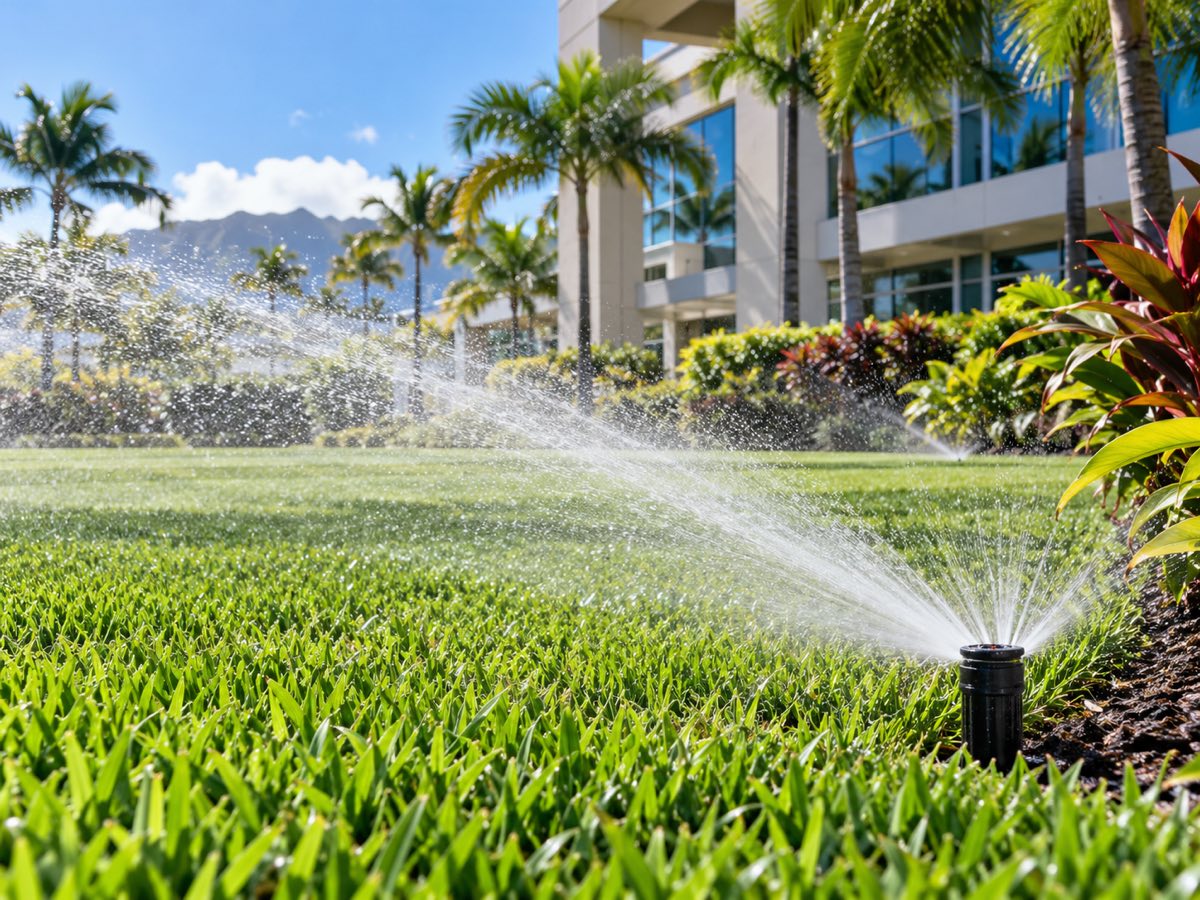
An irrigation system that dries some areas while saturating others may cause uneven growth. Poor drainage can contribute to stressed roots and recurring turf problems. Our commercial landscape installation services include irrigation systems and drainage work. Correcting these conditions may be more useful than repeatedly replacing grass.
3. Determine Whether Existing Grass Can Recover
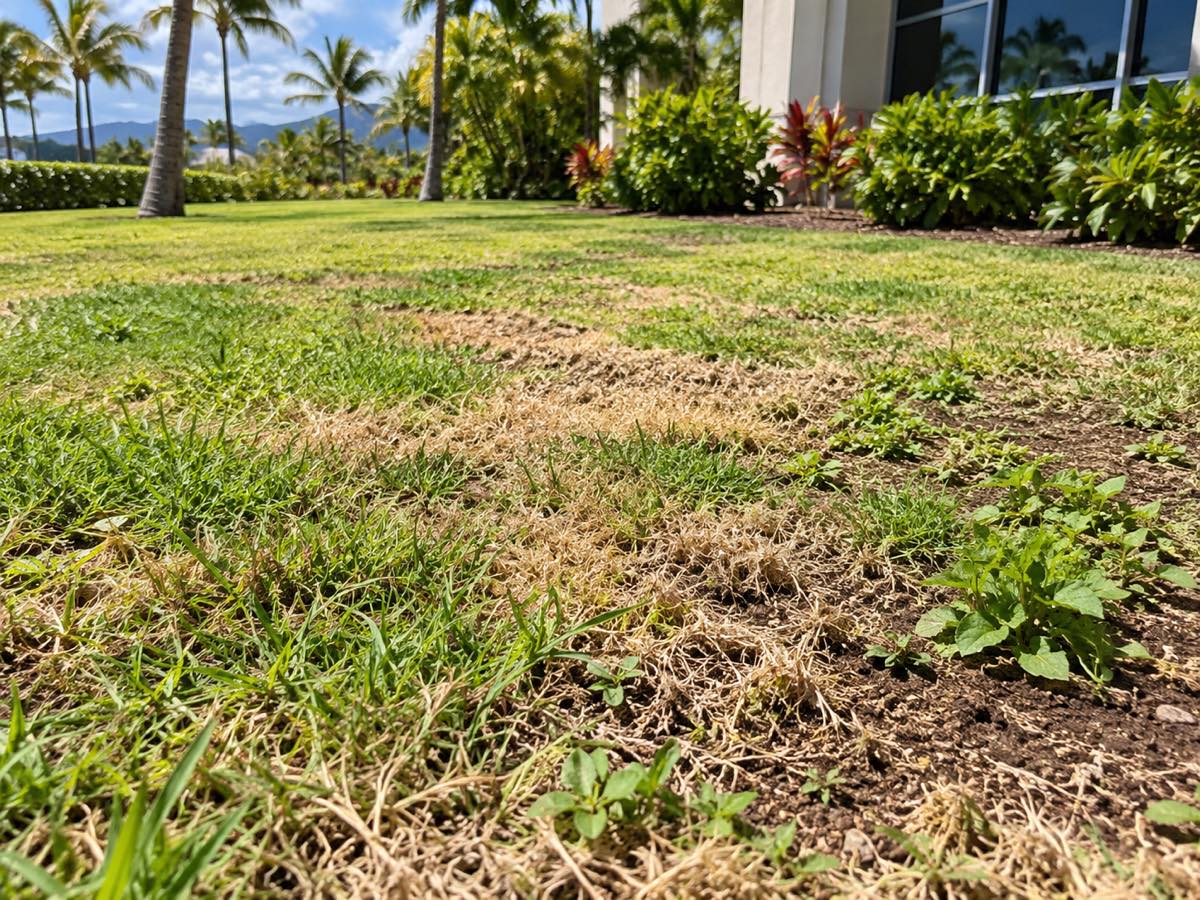
Where substantial healthy turf remains, full replacement may not be necessary. Appropriate improvements might involve irrigation adjustments, weed control, thatch management, or soil correction. Aeration can be useful in some compacted soils, depending on turf condition. Where grass is extensively missing or unsuitable, reestablishment may be more practical.
4. Select a Turf Establishment Method
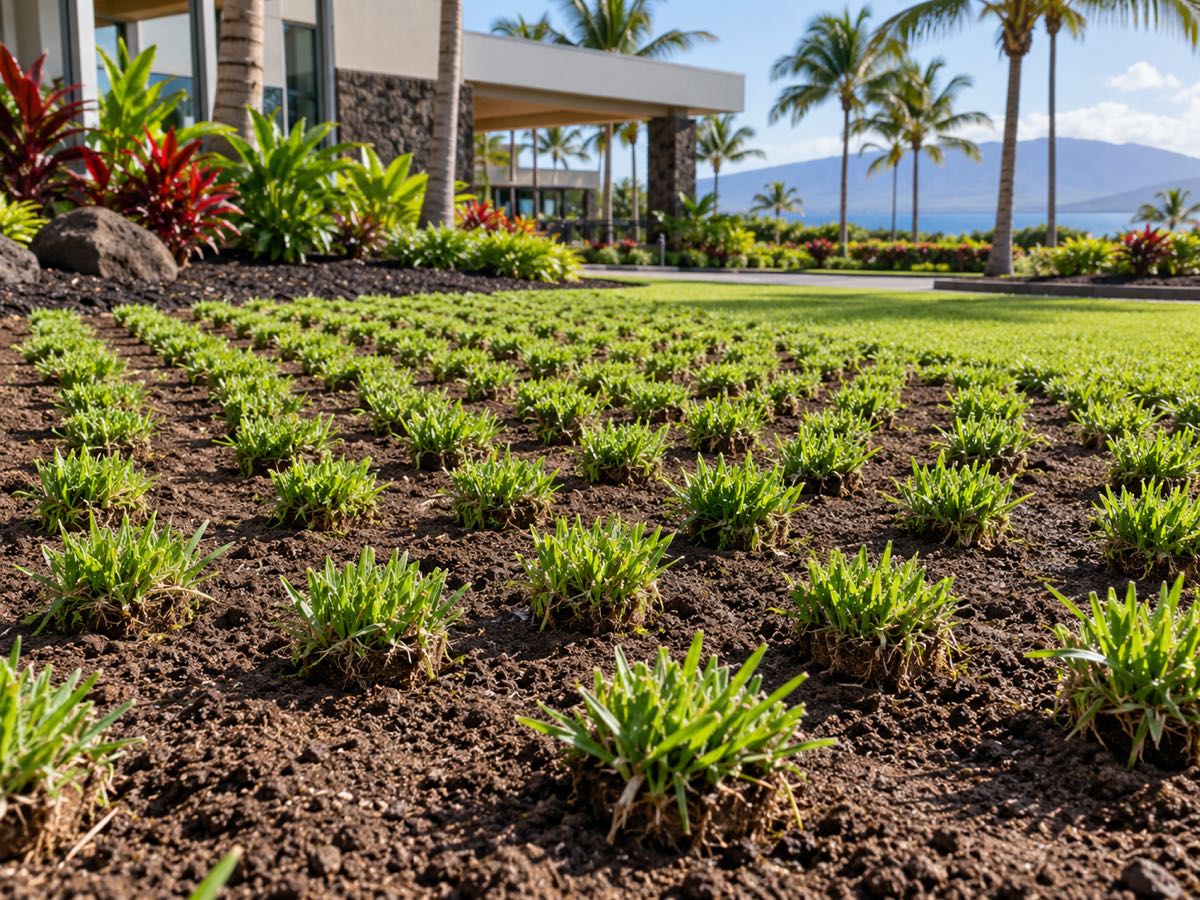
Sod offers relatively immediate coverage but needs appropriate establishment care and can involve higher initial material costs. Sod plugs spread gradually to cover gaps. Hydro mulch uses a sprayed seed-and-mulch mixture suited to certain establishment projects. Repairing healthy existing turf avoids unnecessary replacement when conditions can be corrected. Our confirmed installation offerings include sod plugs and hydro mulch; full sod replacement should not be assumed available without confirmation of project scope.
5. Remove Debris and Address Surrounding Conditions
Accumulated branches, dead plant material, clippings, and unwanted vegetation can obscure site conditions. Our landscape debris removal services include branches, clippings, stumps, soil, and sod. Surrounding plants also affect shade, airflow, and the overall appearance of a restored landscape.
When Lawn Disease or Insects Are Part of the Problem
Not all deteriorating turf needs chemical treatment. Identify symptoms and review moisture, irrigation, soil, and maintenance practices before selecting controls. Fungicides may be appropriate for a correctly diagnosed disease but are not a universal solution. Any pesticide must be approved for the intended use and applied according to its label and applicable requirements.
Coconut Rhinoceros Beetles and Nearby Palms
Coconut rhinoceros beetles primarily threaten palms rather than turfgrass. Characteristic cuts in emerging palm fronds may indicate damage; decaying organic material can also provide breeding habitat. We offer CRB treatment using injection and soil-drenching methods as part of our plant health services. Palm treatment is a separate landscape concern, not a cure for brown lawn patches.
What Determines Lawn Restoration Costs on Oahu?
Costs depend on severity and scope, not just square footage. A few damaged patches differ from a large site with drainage problems and extensive debris. Consider affected area, soil conditions, irrigation deficiencies, turf establishment method, slopes and access, debris removal, and ongoing care. When comparing estimates, ask which corrective work is included and what must be handled separately. You can request a landscaping estimate through our website to discuss commercial property needs.
Keeping a Restored Commercial Lawn from Declining Again
Adjust Irrigation to Actual Conditions
Watering practices should reflect rainfall, soil moisture, grass type, and irrigation coverage. Established lawns often benefit from deeper, less frequent irrigation where practical, while newly established grass may require a different approach until rooted. Avoid applying one schedule to every property.
Maintain Appropriate Mowing
Mowing too short can stress grass and slow recovery. Set cutting height according to the species and site conditions, and avoid scalping already thin areas.
Monitor Weeds and Disease
Watch for recurring discoloration, spreading weeds, poor growth near irrigation heads, and persistently saturated areas. For properties with several lawn sections, maintenance records can help reveal recurring trouble spots.
Maintain the Whole Landscape
Turf is one part of a commercial property's outdoor environment. Shrubs, planting beds, palms, and paved areas all shape its appearance and functionality. Our commercial landscape maintenance services support appearance, plant health, and cleanliness across maintained areas.
Choosing a Commercial Landscaping Provider
Ask whether the provider can address irrigation and drainage, offer an appropriate establishment method, handle debris removal, and explain what maintenance will be needed afterward. Confirm relevant licensing and qualifications for the proposed scope. The estimate should explain included work and any separate services rather than implying every possible treatment is available.
Request an Estimate for Your Oahu Commercial Landscape
If neglected grass affects the appearance or usability of your commercial property, begin by identifying the cause and considering appropriate improvements. We work with commercial properties on Oahu, including office buildings, shopping centers, industrial parks, and hotels. Our services include landscape installation, maintenance, irrigation and drainage installation, debris removal, and plant health management.
Request a Landscaping Estimate: Contact Us | Call (808) 347-4462.