.svg)
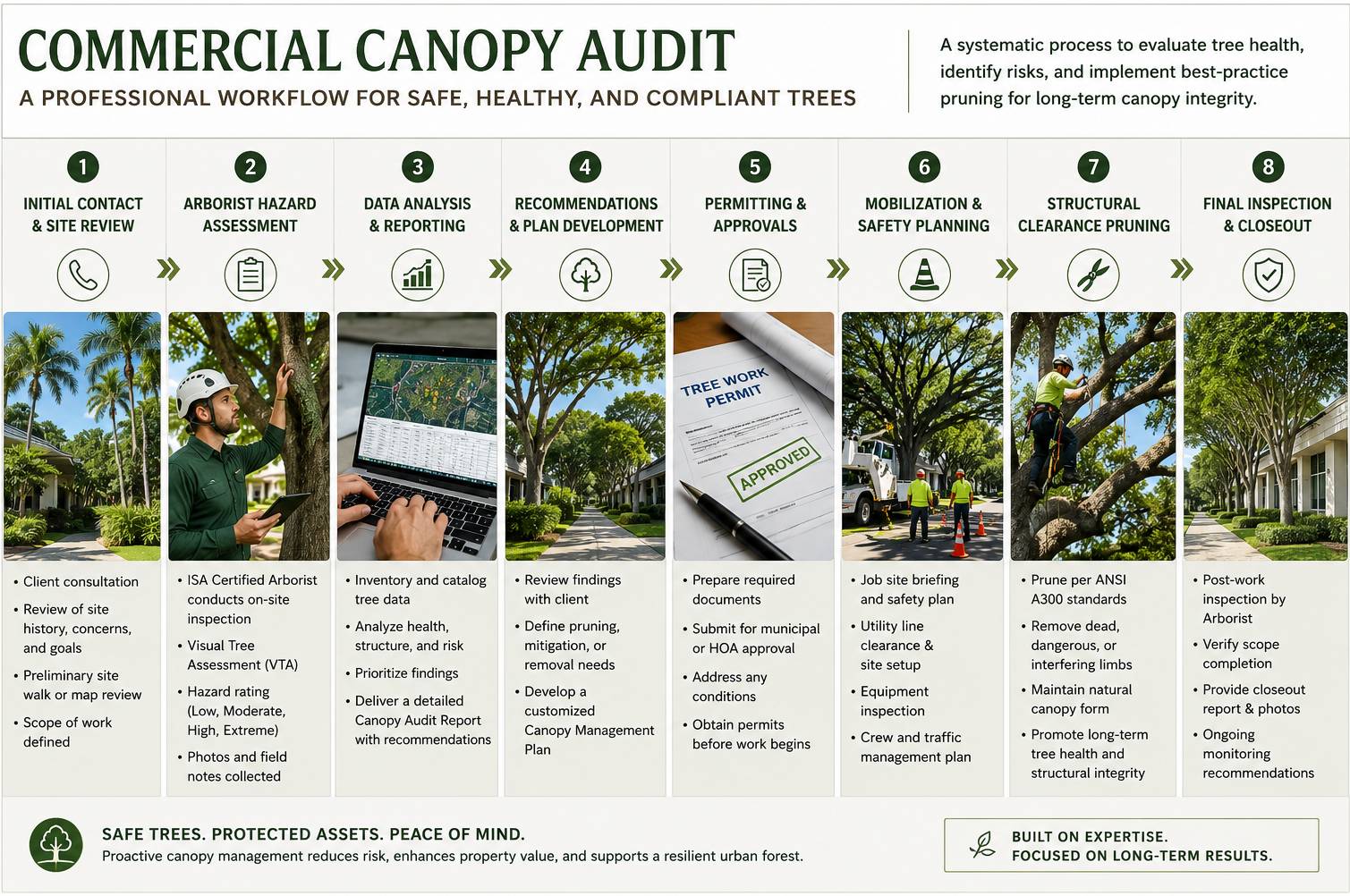
For commercial asset managers, retail center directors, and homeowners' association (HOA) boards across Oahu, landscape care is deeply tied to risk management. While residential properties often view tree care through a purely aesthetic lens, commercial properties must treat canopy maintenance as a structural line of defense against severe weather and legal liability. Neglecting large-format trees on a commercial development introduces immense operational risk, ranging from pedestrian injuries to structural roof damage during high-wind events.
At Pacific Island Landscape LLC, we approach commercial maintenance with an emphasis on liability reduction and structural integrity. This guide outlines the specific steps property managers must take to audit their canopies, understand modern legal obligations, and execute proactive pruning before tropical storms or heavy trade winds impact the island.
Understanding the Legal and Financial Risks of Canopy Neglect
Under standard commercial property management frameworks, asset owners possess a strict duty of care to maintain their grounds in a reasonably safe condition. When a mature tree drops a heavy limb onto a parked vehicle, a pedestrian walkway, or an adjacent building structure, the legal determination of liability frequently hinges on a single question: Was the failure foreseeable?
In Hawaii, this liability is distinctly defined by a legal precedent known as the "Hawaii Rule," originating from the landmark appellate case Whitesell v. Houlton (1981). Under this rule, a tree owner bears active responsibility for their tree's condition. If a tree's branches or canopy pose an "imminent danger" of causing material harm to an adjoining property or person, the tree is legally considered a nuisance. The precedent establishes that if a commercial property owner knows or reasonably should know that a tree constitutes a danger, they are held directly liable for any resulting personal injury or property damage.
Consequently, if a tree exhibits clear structural defects such as deadwood, hollow trunks, decayed fungal brackets, or severe lean and the property management team fails to address it, the resulting damage is legally classified as negligence rather than an unavoidable act of nature. The financial consequences extend far beyond immediate property damage or increased insurance premiums. For retail environments and resort properties, an unmitigated tree failure can result in partial business closures, utility interruptions, and severe reputational damage. Proactive commercial landscape maintenance is the only reliable method for documenting a systematic approach to safety and hazard mitigation.
Proactive Canopy Auditing vs. Reactive Emergency Clearance
The traditional approach to tree care on many commercial properties is fundamentally flawed. Many operations rely on reactive tree trimming, calling out a vendor only after a limb has already cracked or blocked a public right-of-way. This reactive model is significantly more expensive than planned maintenance and drastically increases property exposure during storm seasons.
A high-performance commercial property should operate on a scheduled canopy auditing cycle. A comprehensive audit involves mapping every major canopy asset on the property, assessing structural health, and identifying potential targets such as high-traffic walkways, playground structures, and utility corridors that could be impacted by a structural failure. By identifying internal trunk decay, root stability issues, or poor branch attachments early, property managers can schedule targeted structural pruning during regular operational hours, bypassing the premium costs associated with emergency storm cleanups.
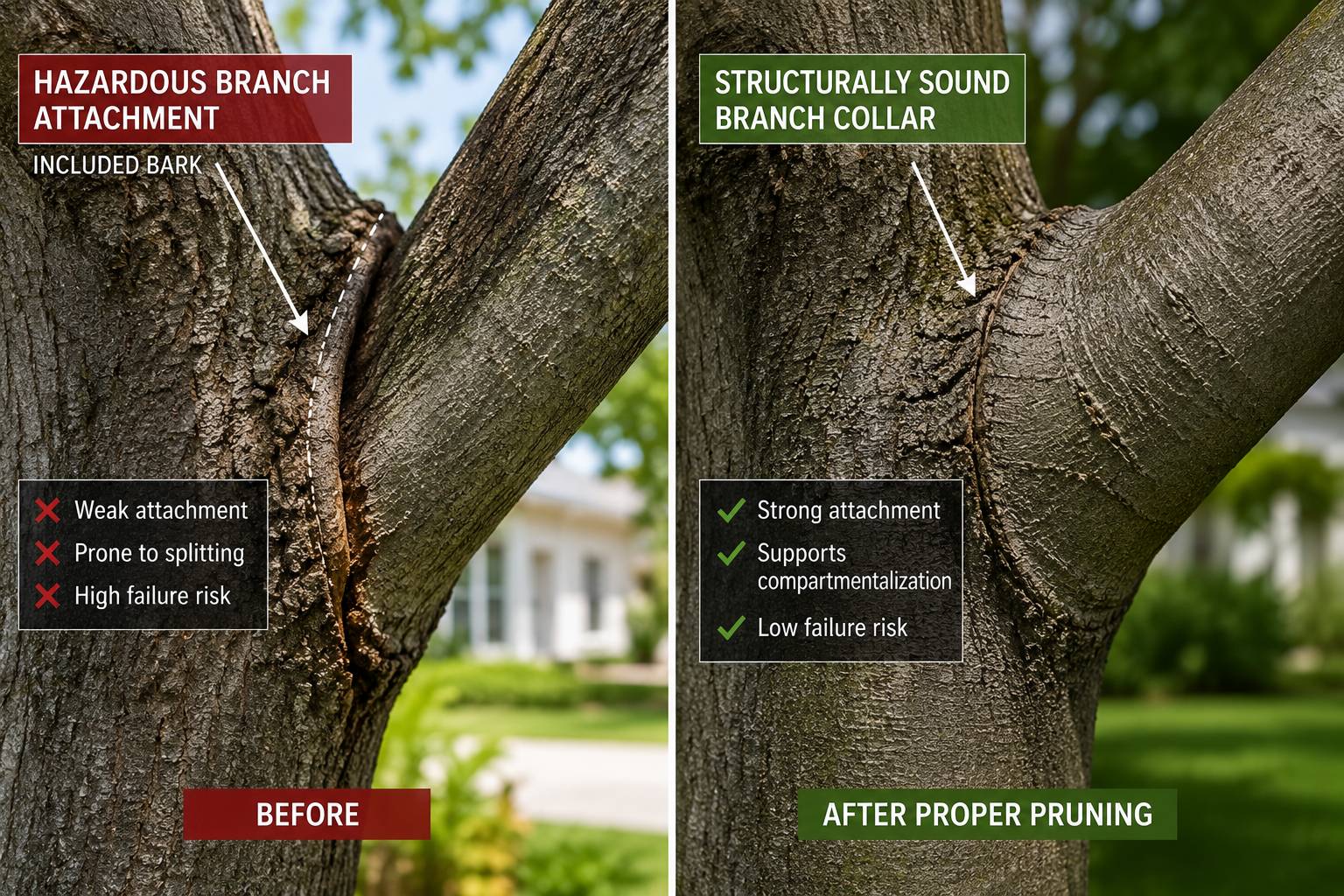
Critical Structural Pruning Techniques for Commercial Safety
Effective commercial tree trimming does not mean stripping a canopy bare or "topping" a tree, which severely compromises its long-term health and makes it more hazardous in the future. Instead, it requires precise, industry-standard cuts executed by qualified professionals to improve wind filtration and structural balance.
The Role of Qualified Professionals in Risk Mitigation
Executing tree care at a commercial scale requires specialized equipment, heavy machinery, and strict adherence to occupational safety guidelines. Utilizing under-insured, uncertified labor to manage large trees on a commercial development is a massive liability. If an uncertified worker is injured on-site, or if their work causes collateral damage to an adjacent utility line, the property owner can be held directly responsible.
Pacific Island Landscape LLC minimizes this exposure. We hold comprehensive liability insurance and operate with trained personnel who follow rigid safety guidelines. This rigorous approach ensures that all field work is fully documented, legally compliant, and executed without disrupting daily business operations or community access.
Furthermore, our vertical integration provides a distinct operational advantage. Because we manage our own landscape nursery in Oahu, our field teams possess a profound understanding of botanical growth rates and structural vulnerabilities across both native and exotic species. We don't just cut limbs; we manage tree assets for long-term health and safety.
Partner With Oahu’s Commercial Specialists
Managing a commercial property or major residential development requires clear operational oversight and a commitment to minimizing risk. Do not wait for high winds or a major storm to expose the hidden liabilities in your property's canopy.
Pacific Island Landscape LLC provides the clear communication, detailed execution, and professional accountability that asset managers require. From initial canopy safety assessments to large-scale structural tree trimming, our teams deliver premium care across Oahu, including Kapolei, Honolulu, and major resort communities.
Contact our estimating team today to schedule a comprehensive canopy audit and review a customized maintenance plan for your commercial asset. Request a Landscape Quote.
Frequently Asked Questions: Commercial Tree Care on Oahu
Do I need a permit to remove a tree on a commercial property in Oahu? In many cases, yes. While you can maintain trees solely on your private commercial property, Oahu prohibits the removal or destruction of any tree designated as “exceptional” without prior City Council approval. Any alteration to an exceptional tree's shape or branches requires a specialized permit from the Department of Parks and Recreation, Arborist Advisory Committee. Always consult a certified professional before removing large-format trees.
Can our maintenance crew trim city-owned street trees fronting our commercial property? No. It is illegal to vandalize, damage, or remove a City tree in Honolulu without explicit permission. The Department of Parks and Recreation’s Division of Urban Forestry (DUF) has strict jurisdiction over all trees growing in the City right-of-way, including those planted along city streets directly fronting your commercial property. Any modifications require coordination and approval from DUF.
How often should a commercial property schedule tree trimming in Hawaii? Best practices for commercial properties dictate a minimum of an annual canopy audit. Structural pruning should ideally be scheduled during late winter or early spring, well ahead of Hawaii’s storm season. Regular, scheduled maintenance is significantly more cost-effective than emergency storm clearance.
What happens if a commercial property owner illegally removes or damages an exceptional tree? Under the Honolulu Exceptional Tree Ordinance, violations for damaging or illegally removing an exceptional tree can result in strict penalties, including fines up to $1,000 per incident. Removing a City right-of-way tree without a permit is also considered criminal property damage and can carry severe legal consequences.
Does pruning a commercial tree require specific safety standards in Honolulu? Yes. Professional tree care and arboriculture operations on Oahu should strictly follow industry-developed standards. Reputable landscape contractors adhere to ANSI A300 standards for safe, ethical tree pruning, an
.svg)