Planting a mature tree can change the character of an Oahu property without waiting years for a small sapling to grow. A well-positioned tree can provide shade, establish a focal point, or bring an appropriate sense of scale to a newly landscaped estate. But installing a large tree involves more than selecting an attractive specimen and choosing where it looks good.
The tree must suit the property's growing conditions, have sufficient room for future development, and be accessible to the equipment needed for delivery and installation. Soil, irrigation, nearby structures, and existing landscaping can all influence whether the proposed location is appropriate.
At Pacific Island Landscape, we provide residential landscape installation on Oahu, including specimen planting for custom homes and estate renovations. We also operate a private nursery in Kapolei with large-format plant material, allowing us to review suitable options as part of an approved landscape project.
Why Large Tree Planting Requires More Planning
A mature tree is not simply a larger version of a young nursery plant. Its root system, weight, canopy, and delivery requirements create considerations that may not exist with smaller landscape material.
For example, a tree that looks proportionate beside a residence may require substantial clearance during delivery. Access gates, overhead branches, paved surfaces, and changes in elevation can affect how the specimen reaches its planting location.
The intended planting area also needs to support the tree after installation. Existing soil conditions, irrigation availability, drainage, and exposure to wind should be evaluated before a species or size is finalized.
These details matter because a tree's appearance at installation is only one part of the decision. The long-term relationship between the tree, the surrounding landscape, and the property must also be considered.
We recommend reviewing the planting location and access requirements before committing to a particular specimen. This allows practical site conditions to inform material selection rather than making installation decisions after a tree has already been purchased.
Choosing the Right Tree for Your Oahu Property
Tree selection should begin with the property rather than a photograph or preferred plant name. Oahu has different growing conditions across coastal neighborhoods, ridge properties, and more sheltered residential settings.
A tree suitable for a protected location may not perform the same way on a property exposed to coastal salt spray or persistent wind. Soil conditions and available irrigation can also affect the selection.
Consider Mature Size and Placement
The canopy and root system will continue developing after installation. A tree positioned too close to a building, wall, walkway, or other landscape feature may eventually create conflicts that require additional maintenance or replacement.
The University of Hawaii's tree-planting guidance emphasizes evaluating mature size and checking the surrounding area for overhead obstacles and underground utilities before planting.
A practical location assessment should consider nearby structures, overhead lines, existing trees, and the space available for future root and canopy growth.
Match the Tree to Its Intended Purpose
A large tree may be selected to provide shade over part of a garden, establish visual structure near an entrance, or complement the architectural scale of a residence.
Those purposes can influence the desired canopy shape, planting position, and amount of surrounding space.
For example, a tree intended to shade an outdoor seating area should be evaluated differently from a specimen selected primarily for visual interest near the driveway. The appropriate choice depends on the property layout and how the space will be used.
Our residential landscape design services can help establish planting arrangements that consider the home's outdoor spaces and existing landscape features.
What to Check Before Delivering a Large Tree
Delivery access is one of the most important practical considerations when planning mature tree installation. Larger specimens may require specialized handling, and their movement through the property needs to be evaluated before the project begins.
A planting location can be suitable for long-term growth but difficult to reach with the required equipment. Narrow entrances, steep slopes, existing hardscape, and overhead obstructions may limit the installation options.
Before approving the scope, it helps to review the following:
1. Property entrances and access routes. Identify gates, driveways, turning areas, and other locations the delivery equipment may need to pass through.
2. Overhead and underground obstacles. Consider existing tree branches, utility lines, buried services, and structures that could interfere with excavation or material movement.
3. Terrain and equipment access. Sloping ground, narrow passages, or limited staging space may affect how the tree can be transported to its intended location.
4. Existing landscape features. Established plants, irrigation lines, paving, and garden walls may need protection or separate consideration during the work.
5. Property rules and approval requirements. Estate access procedures, neighborhood work restrictions, and any applicable project approvals should be reviewed before installation.
These conditions help determine what work is feasible and which responsibilities need to be included in the proposal. If a property presents limitations requiring additional professional direction, those requirements should be identified separately.
Preparing the Planting Area
Once the specimen and proposed location have been reviewed, attention turns to the planting area itself. Preparation should account for the tree's root ball, existing soil, water movement, and surrounding landscape features.
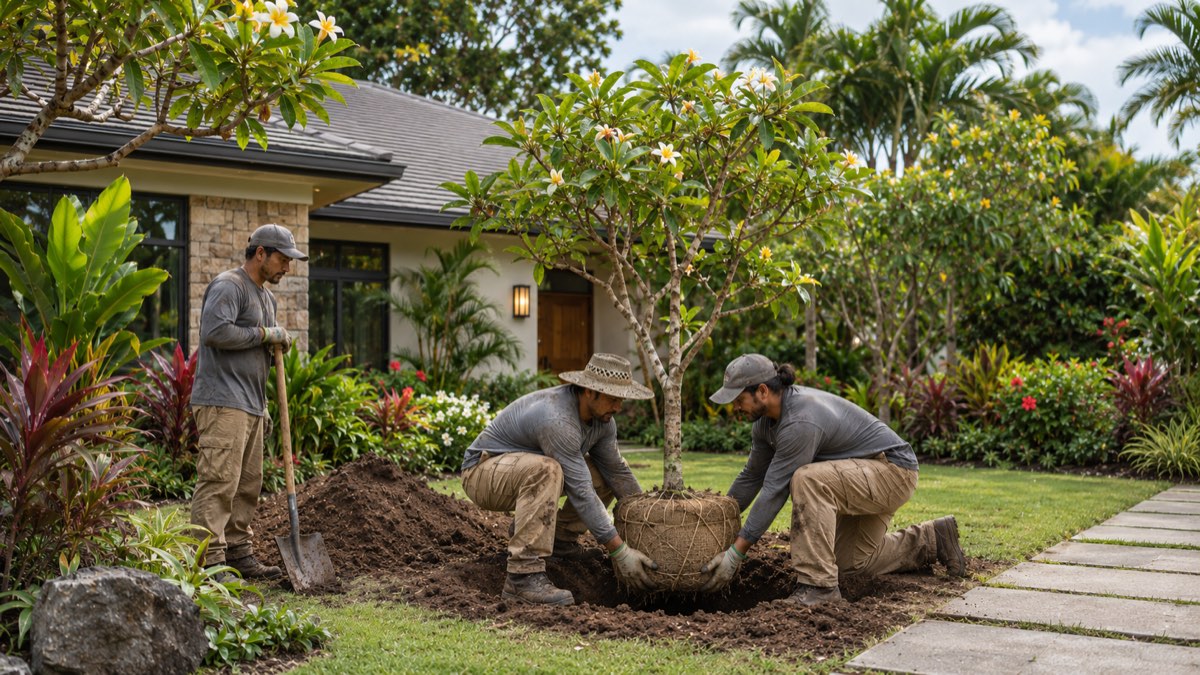
The root ball must be positioned appropriately within the prepared planting area, with enough surrounding soil space for root development. Planting too deeply can create problems, while poorly prepared soil may restrict root growth.
Guidance from Arbor Day Hawaii on planting trees explains the importance of planting-hole width, root-ball positioning, and avoiding excessive planting depth.
Soil conditions also deserve attention. A planting area with compacted soil or persistent water accumulation may need additional assessment before installation proceeds.
For properties involving grading, retaining walls, or drainage concerns, the proposed landscape work must be distinguished from structural or engineered services that require appropriately qualified professionals.
Our installation scopes can include site preparation and approved landscape grading, but work involving engineered drainage or structural requirements must be addressed through the appropriate project responsibilities.
How Large Tree Installation Is Planned
Large tree installation involves several connected decisions, from material selection through the final property review. The work should be planned around the approved design and the conditions identified during the assessment.
The process generally involves confirming the specimen, evaluating site access, preparing the planting location, coordinating delivery, positioning the tree, and reviewing the completed installation.
Specialized equipment may be required depending on the specimen and site. The specific handling arrangements must be determined for the project rather than assumed for every installation.
During planting, care is needed to avoid unnecessary damage to the root ball or trunk. Tree placement should also reflect the approved layout, including the intended relationship between the canopy, pathways, and surrounding vegetation.
We work from approved plans and coordinate with outside design professionals when applicable. If a proposed material or field condition requires a change, it should be reviewed before the substitution or adjustment becomes part of the work.
A final walkthrough provides an opportunity to review the completed planting and discuss any agreed responsibilities for establishment care.
Why Nursery Availability Matters
Selecting a specific mature tree does not automatically mean it is available for installation. Species, size, condition, and inventory can influence which materials are suitable for an approved project.
At Pacific Island Landscape, our private landscape nursery in Kapolei includes large-format canopy trees and specialty plant material. Clients and design professionals can arrange a visit to review available specimens.
This is useful for projects where the appearance and scale of the selected tree are important to the design. Reviewing actual material helps connect the proposed planting plan with the specimens that may be used.
However, nursery inventory changes, and availability should never be assumed. We verify requested species, sizes, and quantities before making project commitments.
If the preferred material is unavailable, any alternative should be discussed and approved rather than substituted without authorization.
Establishment Care After Planting
Installing a mature tree is only the beginning of its adjustment to the new location. The tree must develop roots beyond its existing root ball and respond to the surrounding soil and growing conditions.
Watering requirements during establishment may differ from those of nearby mature plantings. The appropriate irrigation approach depends on the tree, soil, weather, and site conditions, rather than a universal watering schedule.
Mulching and management of competing vegetation may also be considered as part of the agreed establishment plan. Care should be taken to avoid excessive moisture around the trunk and to follow appropriate planting guidance.
Newly installed trees should be observed for changes in foliage, soil moisture, or visible stability concerns. These observations can help determine whether additional review is needed, but they do not establish a diagnosis on their own.
Our residential landscape maintenance services can be discussed separately when ongoing care is requested. Establishment responsibilities, inspection frequency, and any additional work should be identified in the accepted agreement.
No planting or maintenance program can guarantee that a tree will establish successfully. Its response depends on the specimen's condition and the environment in which it is installed.
What Affects Large Tree Planting Costs on Oahu?
Large tree installation costs depend on more than the specimen's purchase price. Material size, delivery conditions, planting preparation, and the equipment required can significantly affect the proposed work.
Important cost considerations include the selected tree and its availability, property access, terrain, excavation requirements, irrigation changes, and any necessary protection of existing landscape features.
A property with open access and a prepared planting area may require a different scope from an estate with restricted gates, sloping terrain, and established hardscape surrounding the proposed location.
If additional site work is needed, those responsibilities should be identified before pricing is finalized. Tree removal, substantial grading, and other separate services may also require their own approval.
We prepare pricing after reviewing the property and requested installation. The written proposal identifies the intended work, selected material, relevant exclusions, and any separately scoped responsibilities.
This allows homeowners to evaluate the proposed project based on its actual requirements rather than relying on generic mature-tree installation prices.
Plan Your Large Tree Installation With Our Team
A mature tree can provide meaningful scale and character to an Oahu landscape, but its success depends on choosing material suited to the property and planning the installation around the site.
At Pacific Island Landscape, we work with homeowners, estate owners, and design professionals on residential landscape installation projects across Oahu. Our process includes reviewing the requested planting, confirming suitable material, evaluating site access, and preparing a property-specific scope.
If you are considering a mature shade tree or another large-format specimen, we can discuss your landscape goals and the practical requirements involved.
Ready to plan your tree installation? Contact Pacific Island Landscape to request a quote. Share your property details, preferred planting location, and any existing plans so we can discuss the next steps.
You can also call 808-347-4462 or email aloha@landscapeoahu.com.
Pacific Island Landscape | Kapolei, Oahu | License CT-35972