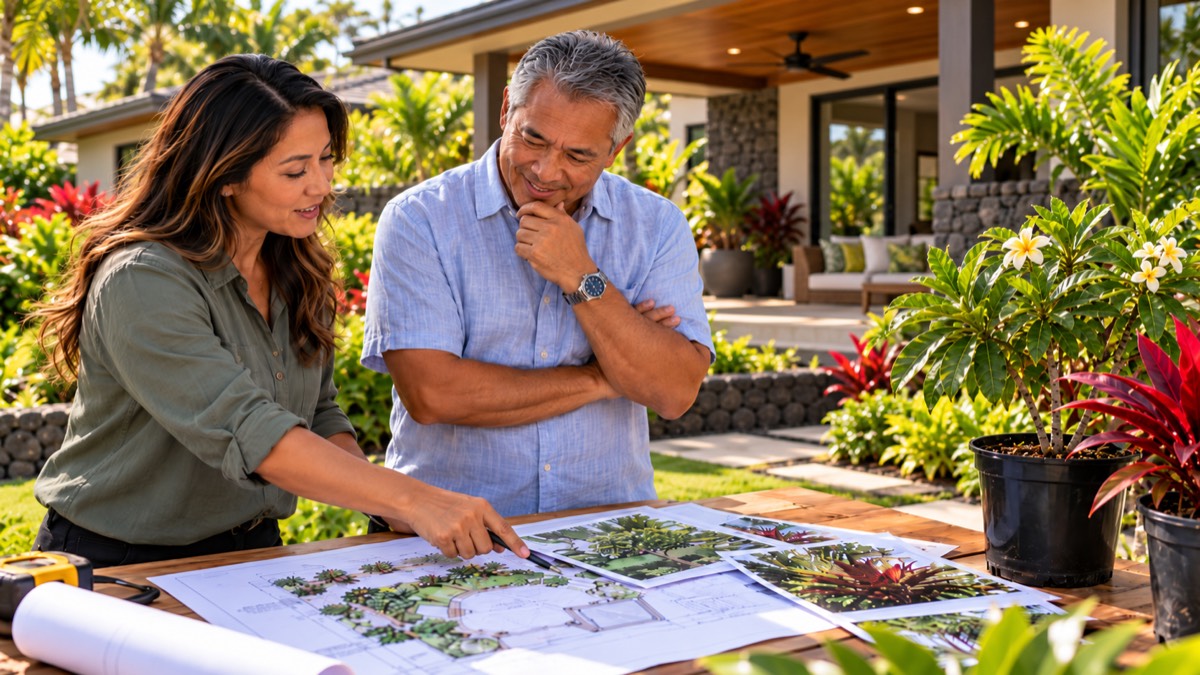
You have approved your landscape design, selected the plants, and prepared for installation. Then your contractor tells you that one of the specified trees or hedges is unavailable and recommends something different.
A plant substitution may seem like a minor adjustment, but it can affect the landscape's appearance, growth, maintenance requirements, and original design intent. This is particularly important for Oahu properties where coastal exposure, wind, and varying site conditions influence plant selection.
At Pacific Island Landscape, we provide residential landscape design and installation for luxury homes and estate renovations across Oahu. We also work directly with landscape architects to translate approved drawings into completed installations, without making unauthorized material substitutions.
If your landscape plans require changes, here is what to evaluate before approving a replacement.
Why Landscape Plant Substitutions Happen
Plant availability can change between the design and installation phases. A particular specimen may not be available in the required size or quantity, or the available material may not meet the project's specifications.
A site review can also reveal conditions that make the original plant selection worth reconsidering. For example, an exposed planting location may have different wind or salt conditions than initially anticipated.
However, an unavailable plant does not automatically justify replacing it with the first similar-looking alternative. A substitution should be evaluated against the approved design and the property's actual conditions.
Our residential design process considers botanical sourcing alongside site exposure, planting arrangements, and irrigation requirements. When an alternative is proposed, those same considerations remain relevant.
1. Compare the Replacement With the Original Design
Start by understanding why the original plant was selected. Its purpose may be more important than its immediate appearance.
A mature tree might provide a visual focal point or help define an outdoor space. A privacy hedge may be specified to create screening between neighboring properties. Smaller plants may establish the intended color, texture, or planting pattern.
Before approving a replacement, review how it compares with the original selection.
| Design Consideration | Questions to Ask |
|---|---|
| Mature size | Will the replacement reach an appropriate height and width? |
| Growth habit | Does it have a similar shape or branching pattern? |
| Privacy screening | Will it provide the intended coverage? |
| Appearance | Does its foliage and overall form suit the approved design? |
| Site suitability | Can it tolerate the property's actual growing conditions? |
| Maintenance | Will it require different pruning or irrigation? |
A smaller plant may be appropriate in some locations but unsuitable where mature screening was an important part of the design.
Likewise, a replacement tree with a substantially different canopy could change how surrounding planting areas and pathways function as it grows.
The goal is not necessarily to find an identical plant. It is to preserve the purpose of the original specification while confirming that the alternative is suitable for the property.
2. Check Whether the Alternative Suits Your Oahu Property
Plant selections should reflect the environment in which they will grow, not simply the appearance of a nursery specimen.
Oahu has varied microclimates. A property in Portlock may experience coastal salt exposure, while an elevated landscape in Hawaii Loa Ridge may have different wind and site conditions.
Even within one estate, shaded courtyards, exposed lawns, and planting areas beside hardscape can have different requirements.
When reviewing a proposed plant substitution, consider its relationship to:
- Sunlight and shade: Whether the location receives suitable light throughout the day.
- Wind exposure: How the plant's growth habit and mature structure relate to the site's conditions.
- Soil and moisture: Whether the planting area provides suitable growing conditions.
- Irrigation: Whether the replacement can be supported by the planned watering arrangement.
- Available space: How the plant's mature size will affect nearby pathways, walls, and neighboring plants.
An alternative that performs well elsewhere on Oahu may not be appropriate for your particular planting location.
We evaluate these considerations as part of our property-specific design and installation work rather than assuming the same plant selection will suit every site.
3. Understand the Difference Between Young and Mature Plant Material
Plant size is another important consideration when evaluating alternatives.
A landscape design may specify mature trees or established hedges because their size is central to the intended arrangement. Replacing those materials with smaller plants can change how the landscape appears immediately after installation.
Smaller material may eventually develop into the intended form, but growth rates and outcomes depend on the species and growing conditions. Homeowners should understand these differences before accepting a revised specification.
At Pacific Island Landscape, we operate a private nursery in Kapolei that supports our projects with large-format trees, established hedging, and distinctive botanical specimens.
Clients and landscape architects can arrange nursery visits to review suitable available material. However, particular species, sizes, and quantities are confirmed for each project. We do not assume that requested inventory will always be available.
Can you reserve a particular plant?
If the project requires material for a future installation phase, discuss availability and any proposed reservation arrangements with the contractor.
A plant being available during design does not establish that it will remain available when installation begins. Any reservation or growing commitment should be documented in the project agreement rather than assumed.
4. Review Irrigation and Maintenance Requirements Before Approval
A plant replacement may require adjustments to the surrounding landscape, especially when its watering or maintenance needs differ from the original specification.
For example, installing a plant with different moisture requirements within an existing irrigation zone may create maintenance complications. Similarly, substituting a rapidly growing shrub for a slower-growing hedge may change the frequency or type of pruning needed.
Before approving a replacement, ask whether the existing irrigation plan remains appropriate and whether the alternative requires different ongoing care.
Our residential estate maintenance services include irrigation auditing, hedge and plant care, and canopy management. These services are established through an approved maintenance agreement rather than automatically included with every installation.
Considering maintenance during the substitution review helps ensure that the replacement is practical beyond the installation phase.
5. Consider Plant-Health and Pest Concerns
Plant-health concerns can also influence whether a proposed replacement is appropriate.
On Oahu, coconut rhinoceros beetle activity is a relevant consideration for certain palms. However, not every palm showing damage has been affected by CRB, and the risk associated with one plant should not automatically be applied to every alternative.
The CRB Hawaii program provides identification and management information for property owners dealing with suspected coconut rhinoceros beetle activity.
We offer CRB evaluation and treatment as a separate specialty service when appropriate. Treatment decisions depend on observed conditions and do not guarantee that an affected palm will recover.
If an existing plant is being replaced because of suspected pest or disease damage, the underlying concern should be evaluated before assuming that a new planting will resolve it.
The replacement species, planting location, and any necessary additional work should be considered together.
6. Get the Proposed Substitution Approved in Writing
A landscape substitution should be documented before the replacement material is installed.
This is particularly important when the original design was prepared by a landscape architect or another design professional.
The proposed change should identify the original specification, the replacement material, and any differences that affect the approved design or project scope.
A clear review should establish:
- What is changing: The original plant and the proposed alternative, including relevant size and quantity requirements.
- Why it is changing: Whether the issue involves availability, site conditions, or another documented concern.
- What the impact will be: Any changes to appearance, maintenance, irrigation, or cost.
- Who must approve it: The homeowner, landscape architect, or other authorized project representative.
If the change affects the approved proposal, the revised responsibility or price should also be documented before work proceeds.
At Pacific Island Landscape, we work as a build partner for landscape architects and do not make unauthorized material substitutions. Our installation process is intended to carry the approved design into the field while keeping proposed changes subject to the appropriate authorization.
What If You Prefer to Keep the Original Plant?
If the specified material is unavailable, you do not necessarily have to approve an alternative immediately.
Ask whether the original plant can be sourced later, whether the planting phase can be reconsidered, or whether the design professional recommends another acceptable option.
The available choices will depend on the project's requirements, the material involved, and the agreed installation schedule.
Retaining the original specification may affect procurement and project planning, so any resulting changes should be discussed before a decision is made.
A contractor should not promise that a particular specimen will become available by a certain date without confirmed sourcing arrangements.
Plan Your Landscape Installation With Clear Material Choices
A landscape plant substitution should be an informed design decision, not an automatic response to unavailable inventory.
The most appropriate alternative is one that supports the original planting purpose, suits the property's conditions, and has been approved by the people responsible for the design.
At Pacific Island Landscape, we coordinate residential landscape design and installation for custom homes and estate renovations across Oahu. Our private Kapolei nursery and collaboration with landscape architects help us review material selections as part of the broader installation process.
If you are preparing a landscape project or reviewing plant specifications for an upcoming installation, we can discuss the property requirements and available options.
Request a residential installation review or call 808-347-4462. You can also email aloha@landscapeoahu.com with your property location, available plans, and planting requirements.