Owning a vacation home on Oahu comes with a landscaping challenge that full-time residents do not always face. Your outdoor spaces continue growing and changing even when no one is staying at the property. Irrigation problems can go unnoticed, hedges may outgrow their intended shape, and fallen branches or accumulated debris can affect the grounds before your next visit.
For part-time homeowners, landscape maintenance requires more than arranging occasional mowing or cleanup. It involves establishing a recurring care plan, defining who can access the property, and deciding how landscape concerns should be communicated when the owner is away.
At Pacific Island Landscape, we provide residential landscape maintenance on Oahu through property-specific estate management programs. We work with homeowners and their designated representatives to establish maintenance responsibilities that reflect the landscape's condition, the property's requirements, and the owner's expectations.
Why Vacation Homes Need Consistent Landscape Care
An unoccupied home does not necessarily have fewer landscaping needs. Plants continue responding to rainfall, sunlight, irrigation, and seasonal growth regardless of whether the owner is present. Without an established maintenance arrangement, relatively small problems may remain unnoticed until the next property visit.
For example, a damaged sprinkler head can affect an entire planting area, while excessive hedge growth may interfere with pathways or established sightlines. Fallen palm fronds and other green waste can also accumulate between visits, particularly on properties with mature vegetation.
Oahu's different growing conditions make these concerns more complicated. Coastal estates may experience salt exposure and wind, while properties in wetter areas can have different irrigation and plant-health requirements. A maintenance schedule that works for one property may not suit another.
Our approach begins with reviewing the existing landscape rather than applying a generic lawn-care package. This helps establish which areas require attention and whether the proposed responsibilities belong within recurring maintenance or need separate approval.
What Should a Vacation Home Landscape Maintenance Plan Include?
A useful maintenance plan should define the areas being maintained and the work expected during recurring visits. For established estates, this typically involves more than turf care because hedges, specimen trees, irrigation systems, and hardscape areas may all require attention.
Our residential estate maintenance services include plant care, irrigation auditing, canopy management, and removal of approved green waste generated during maintenance.
Hedge and Plant Care
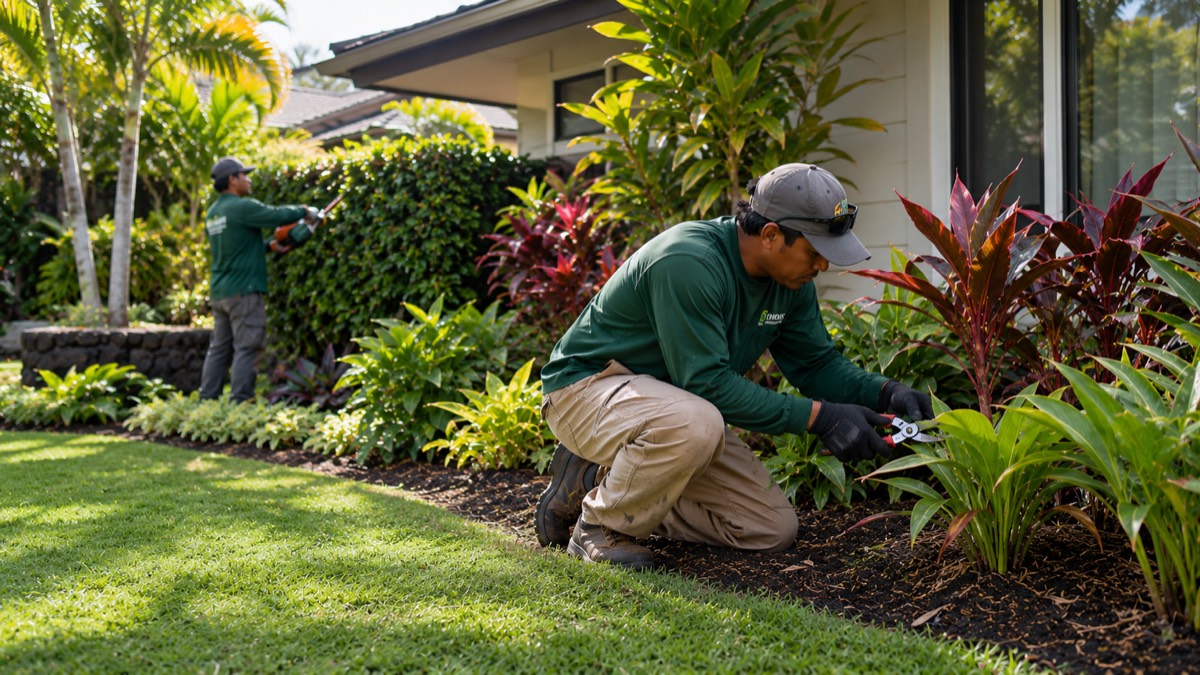
Established privacy hedges are common features of high-end residential landscapes. They may provide screening from neighboring properties, define outdoor spaces, or contribute to the home's architectural appearance.
Without regular attention, hedges can lose their intended shape or extend into pathways and access areas. Our maintenance scopes can include pruning and plant care based on the property's planting arrangements.
A property assessment also helps identify whether existing vegetation needs routine care or whether more substantial work should be considered separately.
Irrigation Monitoring
Irrigation is particularly important when the owner is away because system problems may not be noticed immediately.
Our residential maintenance programs include irrigation auditing, with inspections and adjustments defined by the approved scope. These reviews can identify visible concerns involving sprinkler heads, watering patterns, or system components.
Larger irrigation repairs are not automatically included in recurring care. If more extensive work is needed, the affected components and proposed responsibilities should be documented before proceeding.
Canopy and Debris Management
Mature trees can provide shade and structure, but they also require attention as part of estate landscape management. Appropriate pruning and canopy review may be included in the maintenance plan, while hazardous tree removal or more involved work requires a separately defined scope.
Green-waste removal is another consideration. Our maintenance services include clearing approved landscape debris and removing material generated during scheduled work.
For larger accumulations or separately requested cleanup projects, our residential debris and waste removal services provide a way to review the material and required work before it is approved.
Coordinate Maintenance With Your Estate Manager or Property Representative
When an owner is away, the person managing property access and maintenance decisions becomes an important part of the arrangement.
Some homeowners work with an estate manager, while others designate a family office representative or security team to coordinate approved vendor access. The landscaping contractor needs to know who can authorize entry, communicate property rules, and approve changes to the agreed work.
At Pacific Island Landscape, our estate maintenance programs include a dedicated senior account manager. We can coordinate with authorized property representatives and follow documented access requirements.
Our residential services also recognize the importance of privacy. Crews operate within agreed property protocols, and noise-producing activities are coordinated with applicable neighborhood work restrictions.
Before maintenance begins, homeowners should establish who will receive service communications and how requests outside the existing scope should be handled. These responsibilities are especially important when the owner is unavailable to make decisions in person.
How to Manage Irrigation When the Home Is Unoccupied
An irrigation system that appears to function normally during one visit may develop problems between scheduled inspections. Sprinkler heads can become misaligned, components may leak, and watering requirements can change with site conditions.
For a part-time homeowner, the first step is understanding how the system is arranged. Identify the controller location, planted areas served by each zone, and any known recurring problems.
It is also useful to establish which irrigation observations belong within routine maintenance and which repairs require separate authorization. This prevents uncertainty if a larger problem is discovered while the owner is away.
Owners should not assume that irrigation monitoring guarantees continuous system operation or immediate detection of every malfunction. Instead, the maintenance agreement should describe the inspections being provided and the process for reporting identified concerns.
If your property has recently undergone landscape installation, review whether the current watering arrangement still suits the established plantings. New material and mature vegetation may have different requirements, so any changes should be evaluated as part of the property's approved care plan.
Watch for Plant-Health Problems Between Visits
Plant-health concerns can become more difficult to evaluate when no one is regularly observing the landscape.
Leaves may change color, shrubs can show unusual thinning, and palms may develop visible signs of insect activity. These changes can have several causes, including irrigation conditions, environmental stress, insects, or disease.
A recurring maintenance program can provide opportunities to observe changes during scheduled visits. However, the presence of symptoms does not establish a diagnosis, and specialty treatment should not be assumed to be part of routine maintenance.
Our residential disease control services address visible plant-health concerns through a separately defined evaluation and treatment scope when appropriate.
Coconut rhinoceros beetle activity is another consideration for properties with susceptible palms. Damage may include characteristic cuts in emerging fronds, although confirmation requires appropriate assessment.
If suspected damage is identified, our CRB removal and treatment service can review the affected palms and discuss treatment options. No single treatment guarantees beetle elimination or palm recovery.
Prepare the Landscape Before an Extended Absence
If you know the property will be unoccupied for an extended period, reviewing the landscape before departure can help identify work that should be considered.
This does not necessarily mean arranging a major cleanup. The priority is to understand the current condition of the grounds and confirm the responsibilities already covered by the maintenance agreement.
A practical pre-departure review can include the following steps:
1. Review the irrigation system. Identify visible leaks, damaged components, or known coverage problems that should be evaluated before the property is left unoccupied.
2. Check access routes and vegetation. Look for hedges or branches extending into pathways, gates, and frequently used property access areas.
3. Identify accumulated landscape debris. Confirm whether existing green waste falls within the scheduled maintenance scope or requires separately approved removal.
4. Document plant-health concerns. Note changes in important trees, hedges, and planting areas so the maintenance contractor has a reference for future observations.
5. Confirm property access and communication. Make sure the authorized representative understands the agreed maintenance arrangements and the process for approving additional work.
This review can help establish priorities without introducing unnecessary services or assuming that every concern requires immediate intervention.
How to Review a Vacation Home Landscaping Contract
A landscaping contract should make sense even when the homeowner is not physically present to supervise the work.
The agreement should identify maintained areas, recurring responsibilities, planned visit frequency, and any services that require separate approval. It should also establish how the contractor and authorized property representative will communicate about identified concerns.
When comparing proposals, pay particular attention to irrigation monitoring, canopy work, debris removal, and specialty treatments. These services may have different boundaries depending on the property's condition and requested scope.
For example, routine pruning does not automatically include removal of a compromised tree, while plant-health observation does not necessarily authorize pesticide application. Similarly, major irrigation repairs may require a separate proposal.
Our maintenance process begins with a property review so we can develop a written scope based on actual conditions. We can also assess established landscapes installed by another contractor rather than requiring the property to have been designed or installed by our team.
Clear expectations are particularly valuable for part-time owners because they reduce the need to interpret maintenance responsibilities remotely.
Plan Ongoing Landscape Care for Your Oahu Property
Maintaining a vacation home or part-time residence requires an approach that accounts for the landscape even when the owner is away. Irrigation needs attention, mature vegetation requires appropriate care, and property representatives need clear instructions for coordinating approved work.
At Pacific Island Landscape, we provide residential estate management services for high-end properties across Oahu. Our programs are developed around each property's landscape, access requirements, and agreed maintenance responsibilities.
Whether you are arranging care for an established estate or reviewing an existing maintenance agreement, we can discuss the property's condition and the services you need.
Need landscape maintenance for your Oahu vacation home? Contact Pacific Island Landscape to request a maintenance assessment. Share your property's location, current landscaping concerns, and preferred contact arrangement so we can discuss the next steps.
You can also call 808-347-4462 or email aloha@landscapeoahu.com.
Pacific Island Landscape | Kapolei, Oahu | License CT-35972