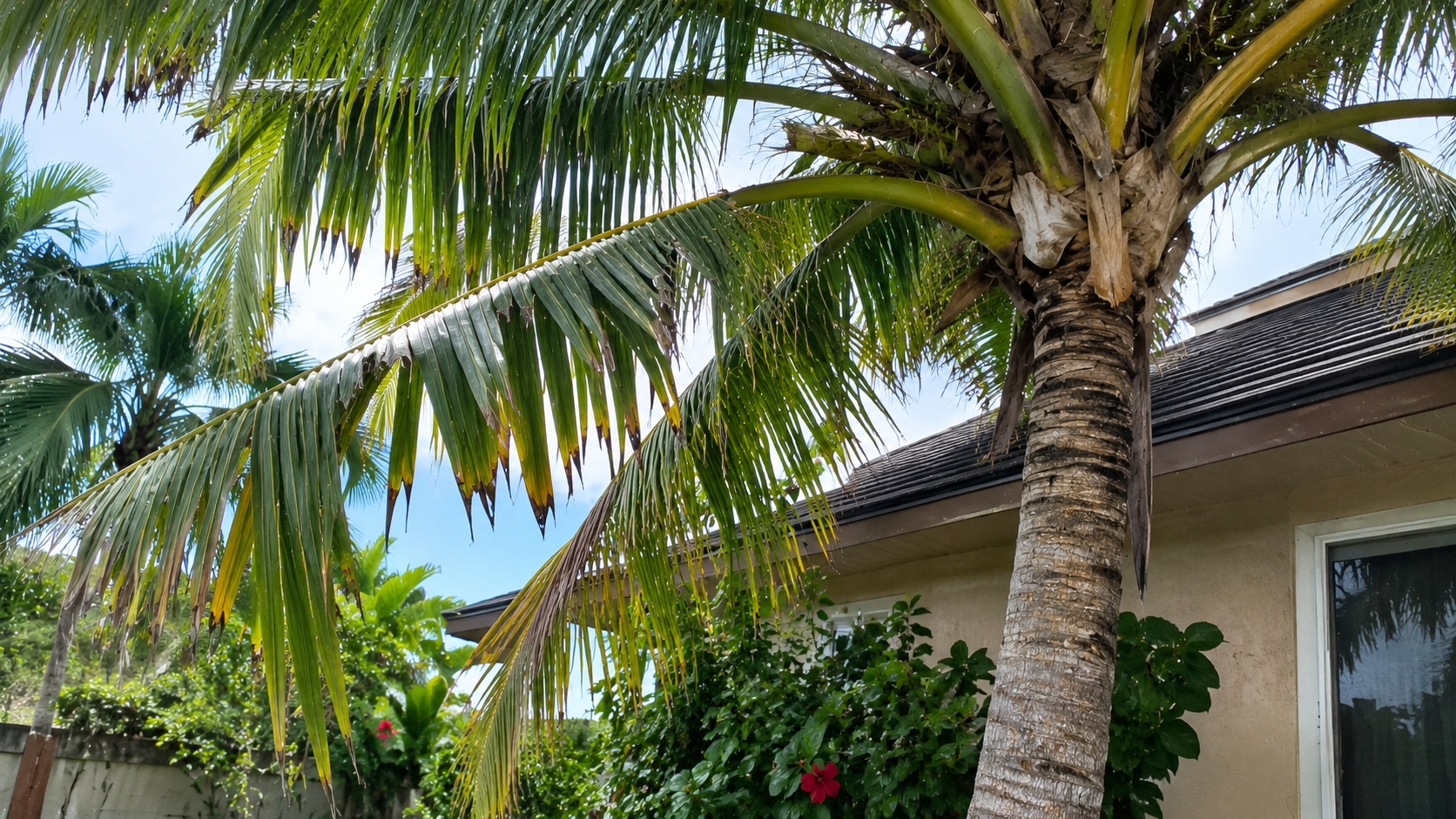
Noticed V-shaped cuts in your palm fronds or unusual holes near the crown? These can be signs of coconut rhinoceros beetle (CRB) activity, but visible damage alone doesn't confirm an infestation.
For homeowners in Waimanalo, the first step is to document what you're seeing and check the surrounding landscape for potential breeding material. Treating a palm without understanding the problem can lead to unnecessary work or leave important conditions unaddressed.
At Pacific Island Landscape, we provide residential CRB evaluation and treatment across Oahu, including Waimanalo. Here's how to respond when you suspect beetle activity and what to expect when requesting professional help.
Step 1: Look for Signs of Coconut Rhinoceros Beetle Damage
Adult coconut rhinoceros beetles bore into palm crowns and feed on developing plant tissue. The damage may become visible as new fronds unfold.
According to the Hawaii Department of Agriculture and Biosecurity, common warning signs include:
- V-shaped cuts: Triangular notches along newly opened palm fronds.
- Bore holes: Openings near the crown or developing leaves.
- Frass: Fibrous material produced by beetle feeding around entry points.
- Damaged new growth: Distorted or severely injured emerging fronds.
Not every damaged palm has CRB. Wind, disease, nutritional problems, and other conditions may produce similar symptoms.
Avoid assuming that an affected palm needs removal. A closer assessment can help determine whether the damage is consistent with CRB activity and what additional investigation is needed.
Document what you're seeing
Before requesting treatment, take clear photographs of the affected palm.
Include a full view of the tree, close-ups of damaged fronds, and any visible entry holes.
Photograph nearby palms as well, even if they appear healthy. This information can help establish which trees need closer examination.
If the palm is tall, avoid climbing or attempting to open the crown yourself.
Step 2: Check Your Yard for Potential Breeding Sites
CRB adults feed on palms, but their larvae develop in decomposing organic material.
This means a homeowner may notice crown damage while overlooking potential breeding material elsewhere on the property.
Common materials worth checking include:
- Rotting palm trunks and stumps
- Accumulated landscape clippings
- Decomposing mulch or compost
- Piles of green waste
- Dead plant material left in damp areas
The CRB Hawaii Response recommends managing potential breeding material as an important part of reducing beetle populations.
However, suspected infested material should not simply be hauled away with ordinary debris.
Be careful when moving landscape waste
Moving untreated material containing beetles or larvae can spread CRB to other locations.
If you discover suspected breeding activity, photograph the material and review current handling recommendations before arranging disposal.
Our residential landscape debris removal services can address approved landscape waste. When CRB is suspected, any necessary treatment, removal, and disposal responsibilities must be established in the work scope.
Green waste cleanup and palm treatment are separate services unless the proposal specifically includes both.
Step 3: Understand Your Palm Treatment Options
Professional CRB treatment depends on the palm's condition, surrounding environment, and suitability of the proposed method.
At Pacific Island Landscape, we offer two potential treatment methods for residential properties.
Palm injection
Palm injection introduces an appropriate systemic treatment into the tree.
The selected product and application method must comply with its label, including any restrictions affecting fruit harvesting and pollinators.
Injection may be considered depending on the palm and site conditions.
Soil drenching
Soil drenching involves applying an appropriate treatment to the root zone for uptake by the plant.
Its suitability depends on the product label, site conditions, and environmental restrictions.
For properties near water or sensitive planting areas, these considerations are particularly important.
Neither method guarantees complete elimination of CRB or recovery of an already damaged palm.
Our residential CRB removal and treatment service begins with reviewing the property before defining the proposed work.
Step 4: Know When Professional Assessment Is Appropriate
Some palm problems can be documented and monitored from the ground. Others warrant closer evaluation.
Consider requesting professional assistance when:
- Multiple palms show possible beetle damage.
- New or worsening symptoms appear.
- The crown is deteriorating.
- Suspected larvae are found in decomposing material.
- The affected palm is too tall to inspect from the ground.
- Previous treatment has not resolved your concerns.
The condition of a palm's growing point is especially important.
CRB damage can affect developing leaves without destroying the entire palm. However, severe injury to the growing point may prevent further growth.
Treatment cannot restore tissue that has already been destroyed.
A professional assessment helps distinguish visible damage from the broader questions of palm condition and appropriate treatment.
Step 5: Know What to Expect From a CRB Property Review
When requesting residential CRB treatment, it helps to understand which services are included.
Our process begins by gathering information about the affected palms and reviewing visible property conditions.
A proposed scope may consider:
| Site consideration | Why it matters |
|---|---|
| Number of palms | Defines which trees require evaluation |
| Palm size and access | Helps determine whether a treatment method is suitable |
| Visible damage | Provides information about possible beetle activity |
| Nearby organic material | Identifies potential breeding conditions |
| Previous treatments | Helps establish what work has already been performed |
| Property conditions | Influences treatment selection and applicable precautions |
Following the review, we define the proposed work in a written estimate.
Additional services such as palm removal, stump grinding, debris hauling, or repeat treatments must be specifically included or authorized separately.
How much does residential CRB treatment cost?
Treatment pricing depends on the number of palms, access requirements, selected treatment method, and approved scope.
If the property also requires debris removal or other landscape work, those responsibilities should be clearly identified.
We do not publish a fixed CRB treatment price because properties can require different services.
Do Waimanalo Homeowners Need to Report CRB?
CRB Hawaii's current reporting guidance states that Oahu residents generally do not need to report CRB sightings or palm damage, although the program can assist with identification.
The Hawaii Department of Agriculture and Biosecurity also provides a pest-reporting service for suspected CRB.
Because reporting guidance can change, check the official resources for current instructions.
If you find a suspected beetle or larva, avoid handling it with bare hands and follow the program's collection guidance.
For identification assistance, you can contact CRB Response through its website.
Request Residential CRB Treatment in Waimanalo
Possible CRB damage deserves attention, but the right response begins with understanding what's happening to your palms.
Checking visible symptoms, reviewing nearby breeding material, and defining an appropriate treatment scope can help you make an informed decision about your landscape.
At Pacific Island Landscape, we provide residential CRB evaluation and treatment across Oahu.
If you've noticed suspicious palm damage at your Waimanalo property, contact our team or call 808-347-4462 to discuss your concerns and request a property-specific estimate.