.svg)
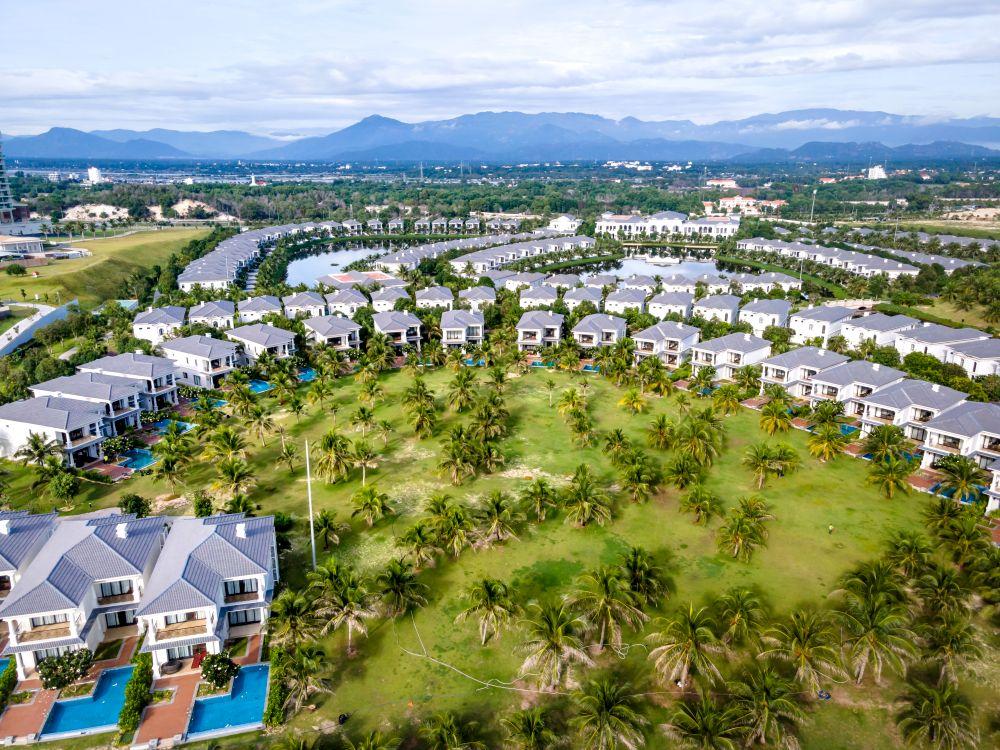
Large lawns give a master-planned community visual continuity and usable open space, but they should not be managed as one uniform irrigation zone. Sun exposure changes across the property. Soil compaction varies with foot traffic. A fixed runtime can create runoff in one area while another area remains dry.
At Pacific Island Landscape LLC, we approach commercial turf management on Oahu as an operating plan, not a promise of uniform green color under every water condition. The goal is to support healthy turf where it serves residents. The plan should reduce avoidable water loss and set priorities before restrictions affect irrigation.
Start With the Property's Water Source and Current Rules
The phrase "water restrictions" can hide several different requirements. A community may receive potable water from the Honolulu Board of Water Supply. Another site may have an approved nonpotable source or a recycled-water system subject to separate operating conditions. The landscape team should not change schedules until management confirms which source serves each irrigation point of connection.
The Honolulu Board of Water Supply rules contain several provisions that can affect landscape planning. Section 1-112 says BWS shall require nonpotable irrigation for large landscaped areas when the department determines that a suitable nonpotable supply is available. Section 2-209 allows BWS to restrict water use when special conservation measures are advisable. Sections 3-319 and 3-320 authorize irrigation limits during declared alert or critical low-groundwater conditions.
Those provisions do not mean every Oahu community is under the same restriction at all times. Applicability depends on the water source and the property's approvals. Conditions declared by BWS also matter. Community managers should verify the BWS public information page and retain property-specific correspondence before directing a contractor to alter irrigation.
| Management question | Document or condition to verify | Why it changes the turf plan |
|---|---|---|
| What supplies each irrigation connection? | Water account records and irrigation plans | Requirements can change with the source classification |
| Is a BWS conservation notice active? | Current BWS notice and its effective area | The notice may change allowable timing or expected use |
| Does the site use recycled water? | Written approval and the site's Management Reuse Plan | BWS rules address overspray and runoff. They also require operating records and public notification |
| Has BWS directed conversion to nonpotable irrigation? | Written BWS notification | The conversion scope and timing should be planned from the actual notice |
Map Turf According to Function
Large-scale lawn care in Hawaii becomes easier to govern when the site map shows why each turf area exists. A recreation lawn used by residents has a different operating priority from a narrow strip behind a utility enclosure. Entry turf may support community presentation, while a steep slope may be difficult to irrigate without runoff. Treating those areas alike obscures where water is producing value.
We recommend dividing the property into management zones based on use and physical conditions. The map should identify high-traffic open space and formal arrival areas. It should also mark slopes and shaded ground. Drainage paths and low-use turf deserve their own notation. This is a planning exercise, not an automatic recommendation to remove lawn.
The zone map gives the board and community manager an order of operations. During normal conditions, it guides scheduling. If conservation measures tighten, management can protect essential use areas first rather than making unrecorded changes across the property.
Establish a Soil Baseline Before Adding Runtime
Dry-looking turf does not prove that the controller needs more minutes. Water may be running off compacted soil. A shallow root zone may dry quickly, while poor drainage can leave another section saturated below the surface. Thatch can further distort what is visible from a cart path. So can uneven sprinkler coverage.
A useful field review compares conditions within each turf zone. Soil moisture should be checked below the surface. The team can observe whether water enters the soil or moves downhill during operation. Compaction deserves attention near paths because it can limit infiltration. Where nutrient or pH questions remain, management can authorize sampling and qualified laboratory analysis rather than relying on color alone.

This baseline helps management distinguish an irrigation problem from a soil limitation. It also prevents one common budgeting error: paying for longer runtimes without correcting the condition that keeps water from reaching the active root zone.
Inspect Irrigation as a Distribution System
Controller settings are only one part of irrigation performance. Each zone should be observed while running. The review should note damaged heads and blocked spray. Visible leaks should be recorded. Pressure symptoms and water reaching pavement also matter. A schedule cannot compensate for poor distribution. A new controller cannot repair field components.
Weather-based and soil-moisture-based controls may be worth evaluating where they are compatible with the existing system. The U.S. EPA WaterSense program explains that weather-based controllers use local weather data with landscape conditions to adjust irrigation. WaterSense-labeled soil-moisture controllers can override scheduled irrigation when the sensor indicates that plants do not need water. These technologies do not guarantee a specific reduction. Results depend on system design and installation. Programming and maintenance also affect performance.
| Field signal | Management decision | Limitation to record |
|---|---|---|
| Water reaches pavement before the cycle ends | Review head alignment and shorter repeated cycles | Cycle-and-soak scheduling cannot fix a broken head |
| One portion stays dry while another is wet | Check distribution and pressure before increasing runtime | A longer schedule may worsen the wet area |
| Irrigation runs after adequate rainfall | Review rain shutoff or controller logic | Sensors need suitable placement and maintenance |
| The same zone contains full sun and deep shade | Evaluate whether the zone can be separated | Controller programming cannot correct incompatible hydrozones |
Coordinate Mowing With Turf Condition
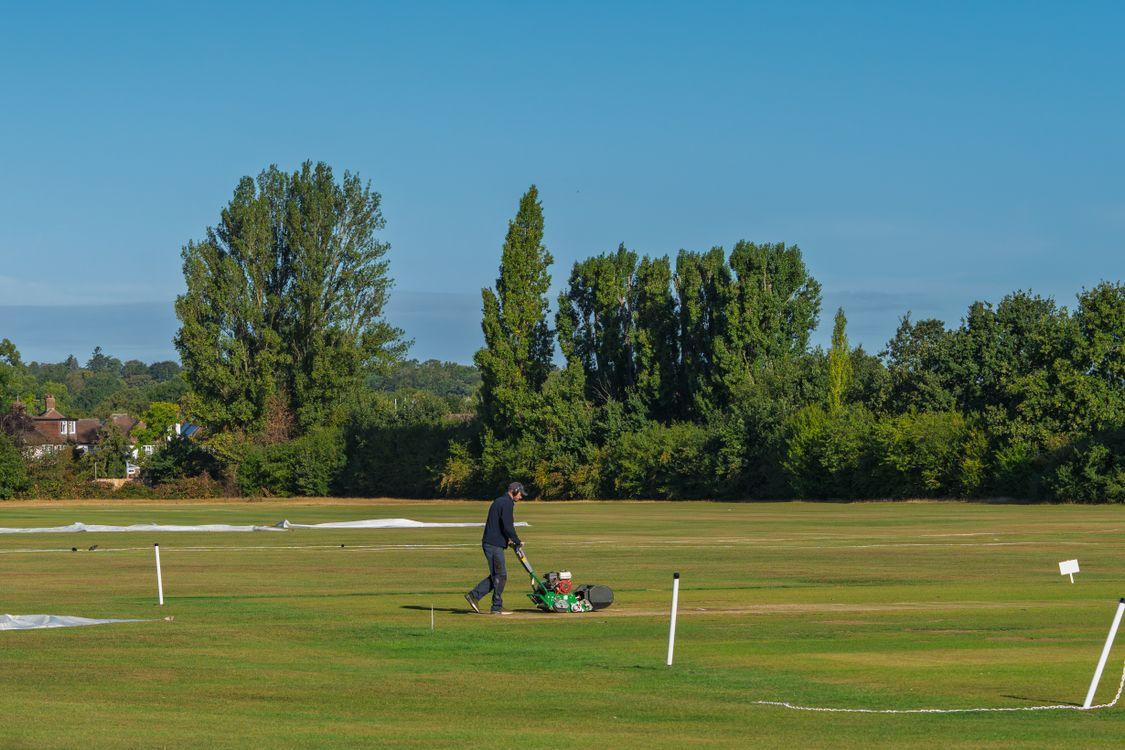
Mowing decisions influence how turf responds to heat and limited water, but there is no responsible universal cutting height for every Oahu property. The correct range depends on turf species and site expectations. Cutting below the suitable range can remove too much leaf area and expose stems. Dull blades can tear tissue, leaving a ragged appearance that may be mistaken for drought stress.
The maintenance plan should identify the turf species where possible and establish a corresponding mowing range. Equipment selection should account for slopes and access. If saturated soil would allow tires to rut the surface, the schedule may need to change. Clippings should be managed according to actual accumulation.
Prepare a Tiered Response Before Water Use Changes
A restriction response should not be invented during the week it is needed. Community managers can approve an operating matrix that links water conditions to landscape action. A separate communication line can keep residents informed. The matrix must remain subordinate to active BWS direction and the property's approved water-use documents.
| Operating condition | Landscape response | Management record |
|---|---|---|
| Normal operation | Use zone-specific schedules and correct distribution defects | Runtime log and repair record |
| Voluntary conservation request | Recheck soil need and postpone nonessential irrigation where appropriate | Date and affected zones; manager authorization |
| Mandatory restriction | Follow the stated limits and reprioritize approved turf zones | Restriction notice and controller changes |
| Supply interruption or low pressure | Suspend operation if the system cannot run correctly | BWS notice and restart inspection |
Color expectations should be addressed in the same plan. Reduced irrigation can produce temporary visual changes, and the response varies by turf species as well as site condition. We do not recommend promising uniform green color during a restriction. A better standard starts with documented compliance. It protects functional areas where permitted and identifies damage that needs a separate decision.
Evaluate Low-Use Turf Through Capital Planning
Some lawns earn their footprint through recreation or community identity. Other turf may remain only because it was included in the original plan. If a low-use zone repeatedly shows runoff or access difficulty, management can evaluate a phased redesign. That evaluation should address drainage and sightlines. Association standards and utility access must also be checked.
Replacement planting is not automatically water-efficient. Plant selection must fit the site's sun and soil. Mature size and the available irrigation method also matter. Our private landscape nursery in Kapolei can support plant sourcing discussions, subject to current inventory and project specifications. We confirm the plant schedule before any commitment is made.
Make Turf Performance Visible to the Board
Commercial turf management on Oahu is easier to budget when the monthly report separates routine care from exceptions. Records should show irrigation defects and authorized schedule changes. Recurring wet or dry areas should remain visible until resolved. Photos can show whether a repair corrected the condition. Water bills matter, but billing days and known leaks affect interpretation.
At Pacific Island Landscape LLC, we provide commercial landscape maintenance and irrigation setup on Oahu. For a master-planned community, we can discuss the turf areas and operating constraints before work is priced. We then define the requested scope in the proposal so management can evaluate what is included without relying on an unverified savings or appearance guarantee.

.svg)