Coconut rhinoceros beetles (CRB) can seriously damage the palms that define commercial landscapes throughout Mililani and Central Oahu. Their feeding activity leaves distinctive cuts in palm fronds, damages new growth, and can eventually kill heavily affected trees.
For property managers, that damage is more than a landscaping concern. Declining palms can disrupt the appearance of building entrances, parking areas, and other outdoor spaces. If affected trees need replacement, the work can also create unplanned maintenance expenses.
Managing CRB requires more than treating visibly damaged palms. Effective control involves identifying beetle activity, managing breeding material, considering appropriate palm treatments, and monitoring for further damage.
At Pacific Island Landscape, we provide commercial landscaping services across Oahu, including coconut rhinoceros beetle treatment using injection and soil-drenching methods.
Why Coconut Rhinoceros Beetles Are a Concern in Mililani
The coconut rhinoceros beetle (Oryctes rhinoceros) is an invasive insect that feeds inside the crowns of palm trees. According to the Hawaii Department of Agriculture and Biosecurity, CRB was first detected at Joint Base Pearl Harbor-Hickam in December 2013. Since then, the beetle has become an established concern across Oahu.
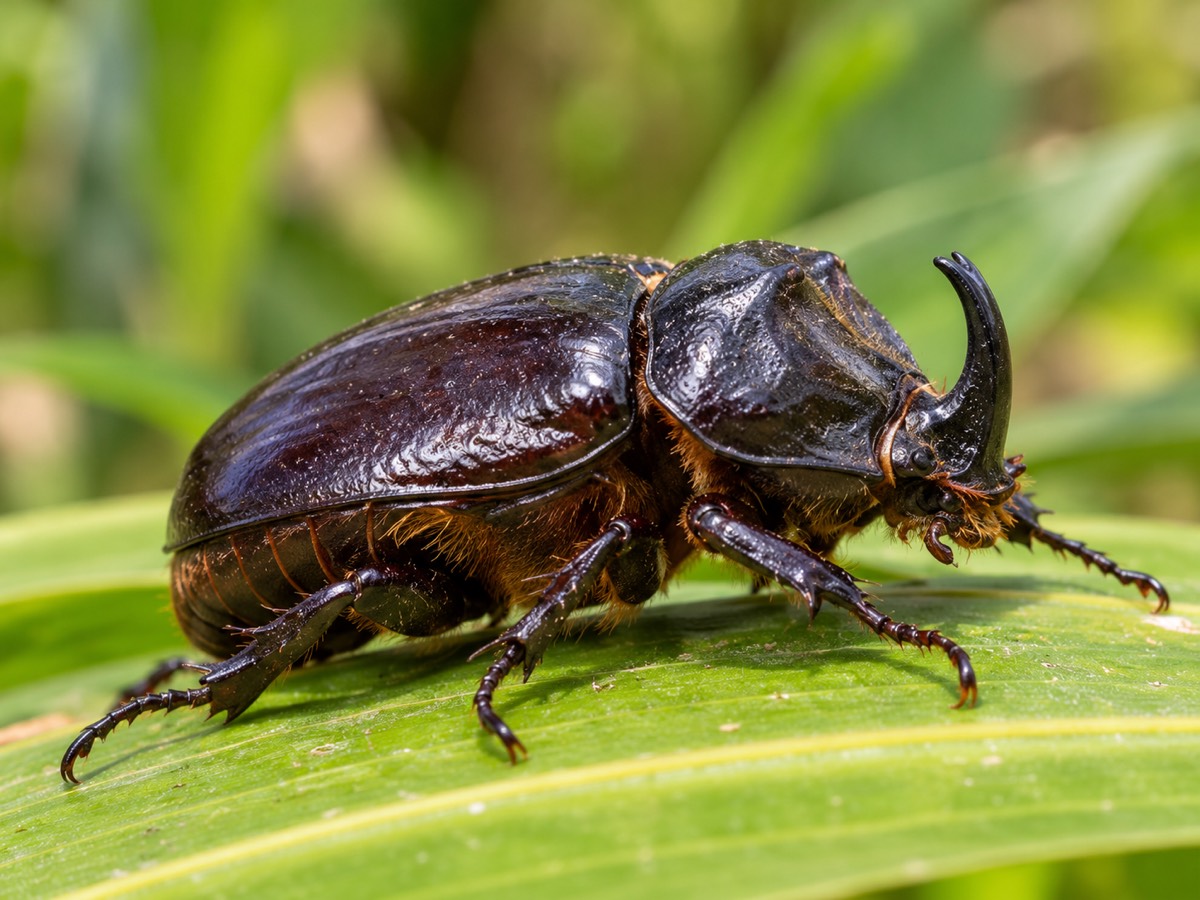
Adult CRB attack coconut palms and can also damage royal palms, date palms, and fan palms. By boring into the crown, the beetles reach the developing fronds and feed on internal plant tissue. Repeated feeding can interfere with new leaf development, weaken the palm, and eventually cause severe decline.
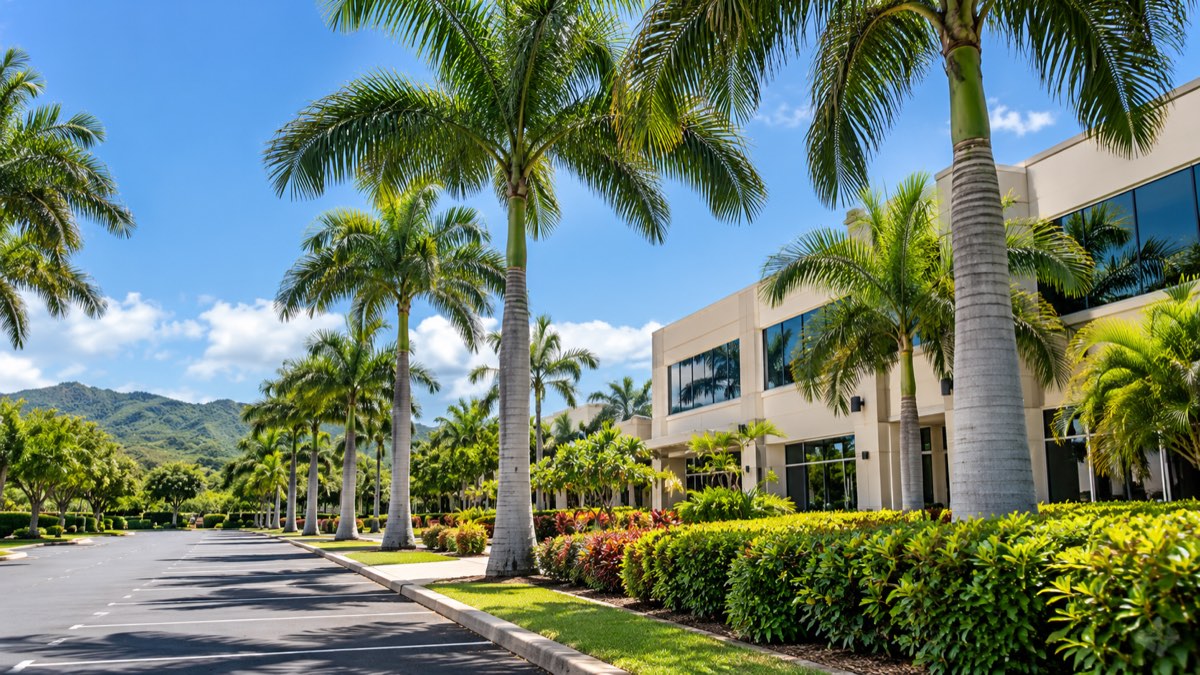
Commercial properties may have multiple susceptible palms near building entrances, pedestrian areas, landscaped medians, and parking lots. Adult beetles feed on palms, while larvae develop in decomposing organic material. Property managers therefore need to consider both the trees and the surrounding landscape.
How to Identify Coconut Rhinoceros Beetle Damage
CRB damage is not always visible immediately. Adult beetles feed inside developing palm leaves, and the resulting cuts may become apparent only after those leaves emerge.
Look for these warning signs:
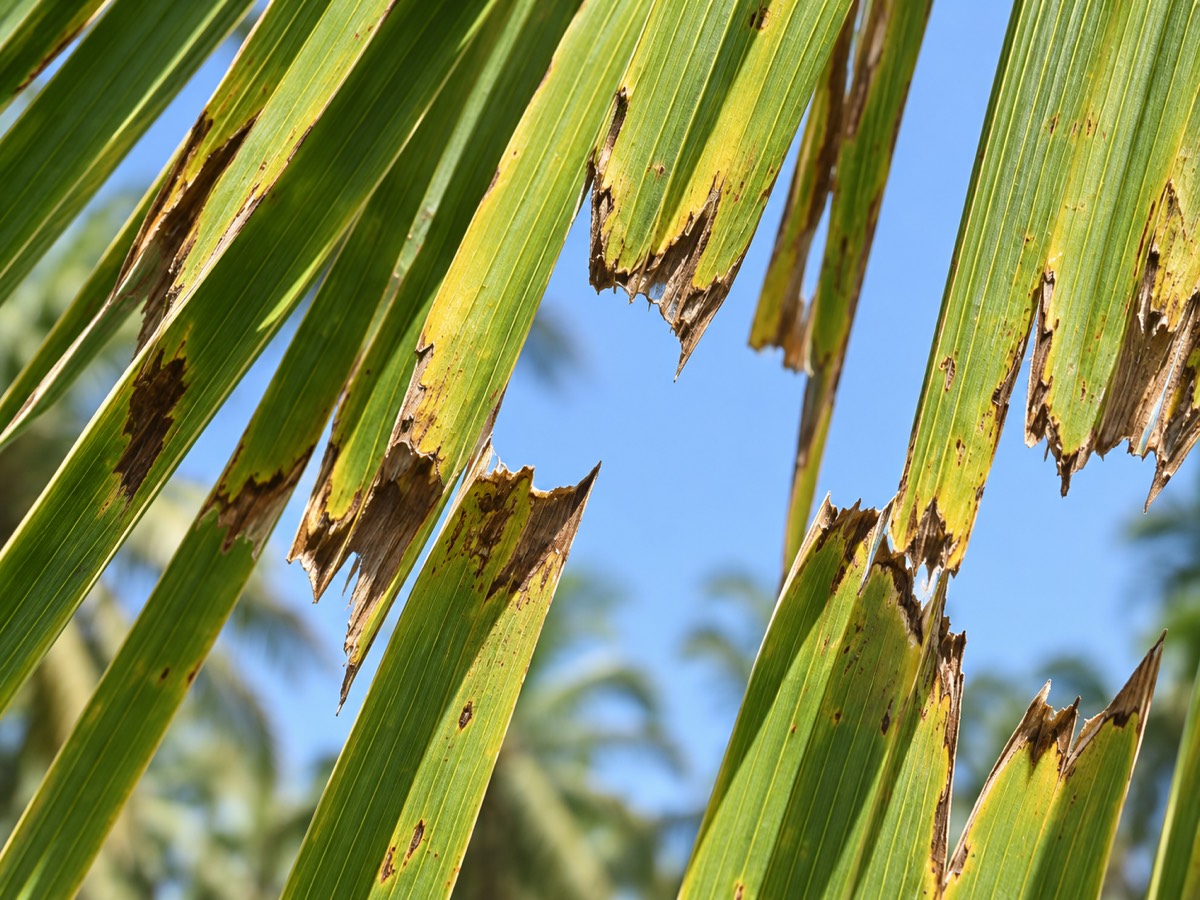
- V-shaped cuts in fronds: Distinctive angled notches, often around 45 degrees, appear as damaged leaves unfold.
- Boreholes near the crown: Beetles create entry holes that may measure approximately 1 to 2 inches across.
- Scalloped leaf edges: Some palms, particularly fan palms, develop irregular edges or patterned holes.
- Fibrous debris near feeding sites: Damaged plant tissue may be visible around holes or in accessible crown areas.
- Adult beetles: Dark brown to black insects measuring approximately 1.5 to 2.5 inches long, with a visible horn.
A series of damaged fronds may indicate repeated feeding, especially when newer growth continues to show injury. However, visible damage does not necessarily mean beetles are currently inside the palm; older injuries can remain visible for months. A palm without obvious cuts may also have recent feeding activity that has not yet appeared in its emerging leaves.
Distinguishing CRB Damage From Other Palm Problems
Not every unhealthy palm has a rhinoceros beetle problem. Nutrient deficiencies may cause yellowing or discolored fronds. Mechanical damage from trimming can resemble beetle feeding, while other insects and diseases may cause crown deterioration.
If multiple palms show unexplained damage, document which trees are affected and photograph the crowns and newly emerged fronds. These records can help distinguish old injuries from developing problems.
CRB Treatment Methods for Commercial Properties in Hawaii
There is no single treatment that completely eliminates coconut rhinoceros beetles from an affected area. Hawaii CRB Response guidance emphasizes combining palm treatments with management of breeding material. The appropriate approach depends on palm condition, environmental context, and beetle activity.
1. Palm Injection Treatments
Palm injection introduces an appropriate systemic treatment into the tree. When beetles feed on treated tissue, they may be exposed to the active ingredient. Injection can be considered where palms are difficult to access at crown level, and it is one of the CRB treatment methods we offer.
Suitability depends on the palm, pesticide labeling, environmental considerations, and treatment objectives. Injection does not repair existing damage or guarantee that beetles will stop visiting treated palms.
2. Soil-Drenching Treatments
Soil drenching uses an appropriately labeled soil application that a palm can absorb through its roots. We offer this CRB treatment method as well. Its suitability depends on product labeling, palm size, soil conditions, and restrictions involving application rates or nearby water.
Field effectiveness can vary, and some soil-drench applications have less supporting field evidence than injection methods. Treatment selection should reflect conditions on the property rather than convenience alone.
3. Managing CRB Breeding Material
Female beetles lay eggs in decaying organic matter, including decomposing palm trunks, stumps, green waste, compost, mulch piles, and rotting wood. Managing this material is essential alongside treating feeding beetles.
Our commercial landscaping services include debris and waste removal, covering branches, clippings, stumps, soil, sod, and other landscape debris. Suspected infested material should not simply be chipped, transported, or redistributed without checking current CRB handling requirements, because moving it could spread beetles.
4. Trapping and Monitoring
Pheromone traps can attract adult beetles and help track activity, but trapping alone does not reliably protect surrounding palms. In larger landscapes, recording which palms show new damage can help inform treatment planning.
How to Reduce CRB Breeding Sites Around Your Property
Preventing breeding habitat from accumulating is one of the most useful actions a commercial property manager can take.
Keep Landscape Debris Under Control
Routine landscaping generates clippings, branches, and other organic material. Avoid leaving debris in neglected areas where it can remain moist and decompose. Review how green waste is collected, stored, and removed, and verify proper handling procedures if larvae are discovered.
Pay Attention to Mulch and Compost
Mulch benefits many landscapes, but decomposing organic material can also support CRB larvae. Monitor substantial mulch accumulations, unmanaged compost, and undisturbed organic material. Relocating a suspicious pile may move beetles or larvae with it.
Monitor Palm Growth Over Time
Inspect existing damage and newly emerging leaves. Keep dated photos showing affected palm locations and observed changes. Damaged leaves may continue emerging after treatment because injuries occurred earlier, so new visible cuts do not automatically prove a treatment failed.
What Commercial Property Managers Should Consider Before CRB Treatment
A property with several palms needs a different management discussion from a site with only one affected tree. Important factors include:
- Number and types of palms, including susceptibility and overall site coverage.
- Visible crown damage and a record of newly emerging injuries.
- Palm size and accessibility for potential treatment methods.
- Nearby mulch, compost, and green waste that could support larvae.
- Soil and environmental conditions affecting soil-applied products.
- Previous treatment history and surrounding properties.
For offices, hotels, retail centers, and industrial properties, palm protection should fit into broader maintenance planning. Treating palms without addressing breeding material may limit the effectiveness of the overall approach.
Choosing a CRB Treatment Provider in Mililani
Ask a prospective provider which palms are suitable for the proposed treatment, what product and application method will be used, how breeding material will be addressed, how new damage will be evaluated, and what follow-up considerations apply.
For pesticide applications, verify the credentials required for the specific work. Hawaii pesticide rules and product labels determine when certified applicators are required. Avoid providers promising an instant or guaranteed cure.
Commercial CRB Treatment With Pacific Island Landscape
We understand that palms contribute to the appearance and character of Oahu's commercial properties. When CRB damages those trees, property managers need to understand what treatment options are available and how those options fit into ongoing landscape care.
Our commercial landscaping services include CRB management using palm injection and soil-drenching methods. We also provide related landscape maintenance, debris removal, and plant disease control services.
If you manage a commercial property in Mililani or elsewhere in Oahu, contact us to discuss your palm concerns and available treatment options.
You can request a landscaping estimate through our contact form or call (808) 347-4462.
Tell us which palms are affected, what damage you have noticed, and whether your property has any known CRB breeding material. That information can help us understand your needs and discuss an appropriate next step.