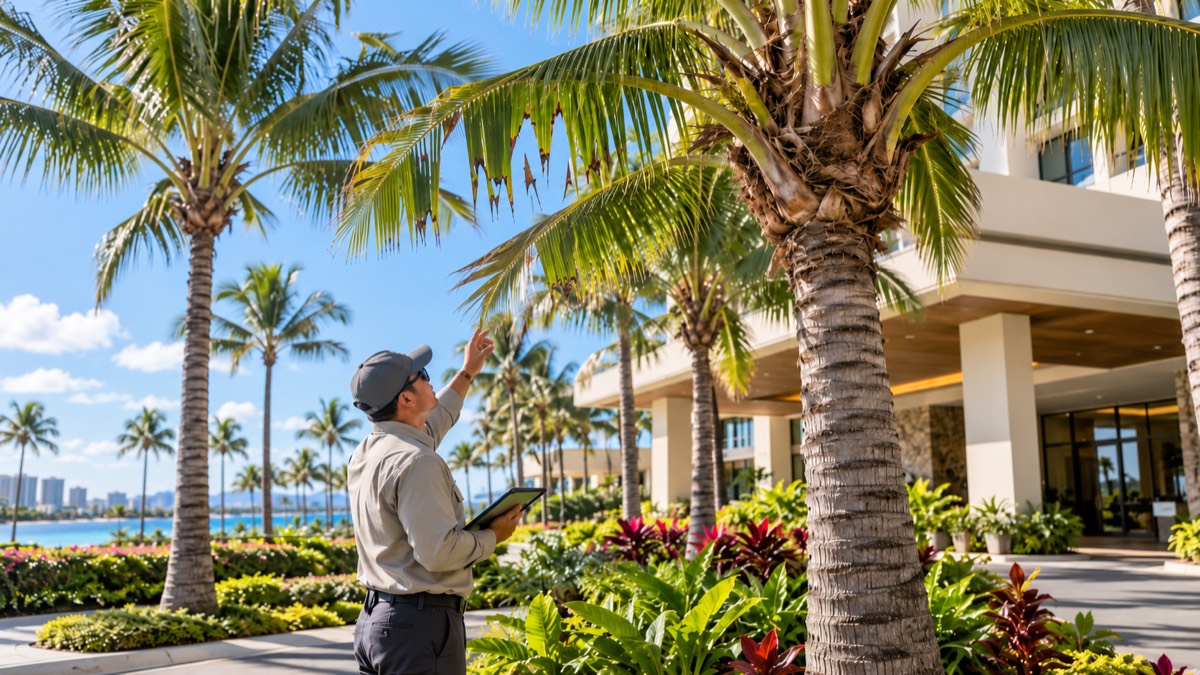
Coconut rhinoceros beetles (CRB) are a serious concern for commercial properties across Oahu. These invasive pests bore into palm crowns, damage developing leaves, and can weaken or eventually kill susceptible palms through repeated feeding. For hotels, shopping centers, office buildings, and industrial properties, CRB damage can affect curb appeal and increase landscape maintenance expenses, particularly when mature palms are prominent features of entrances, parking areas, and outdoor common spaces.
At Pacific Island Landscape, we provide commercial CRB treatment on Oahu using injection and soil-drenching methods. Combined with our landscape maintenance and debris removal services, these offerings help businesses address damaged palms and manage landscape conditions that may contribute to beetle activity.
Why CRB Is a Threat to Commercial Landscapes
The coconut rhinoceros beetle (Oryctes rhinoceros) was first detected on Oahu in December 2013 and has since spread to other parts of the island. Adult beetles feed inside palm crowns, damaging young leaves before they unfold. As these fronds emerge, they often reveal distinctive V-shaped cuts, one of the most recognizable signs of CRB activity. Repeated feeding can interfere with healthy growth and may eventually threaten a palm's survival.
Commercial properties face an additional concern because CRB larvae develop in decomposing organic material, which can accumulate during routine landscaping. Potential breeding sites include:
- Green waste piles: Accumulated grass clippings, branches, and other landscape debris.
- Dead palm material: Decaying fronds, stumps, and woody vegetation left on the property.
- Mulch and compost: Large, moist piles that remain undisturbed for extended periods.
Managing these materials is an important part of CRB prevention. Treating affected palms without addressing potential breeding sites may leave conditions that support future beetle activity.
How to Identify Coconut Rhinoceros Beetle Damage
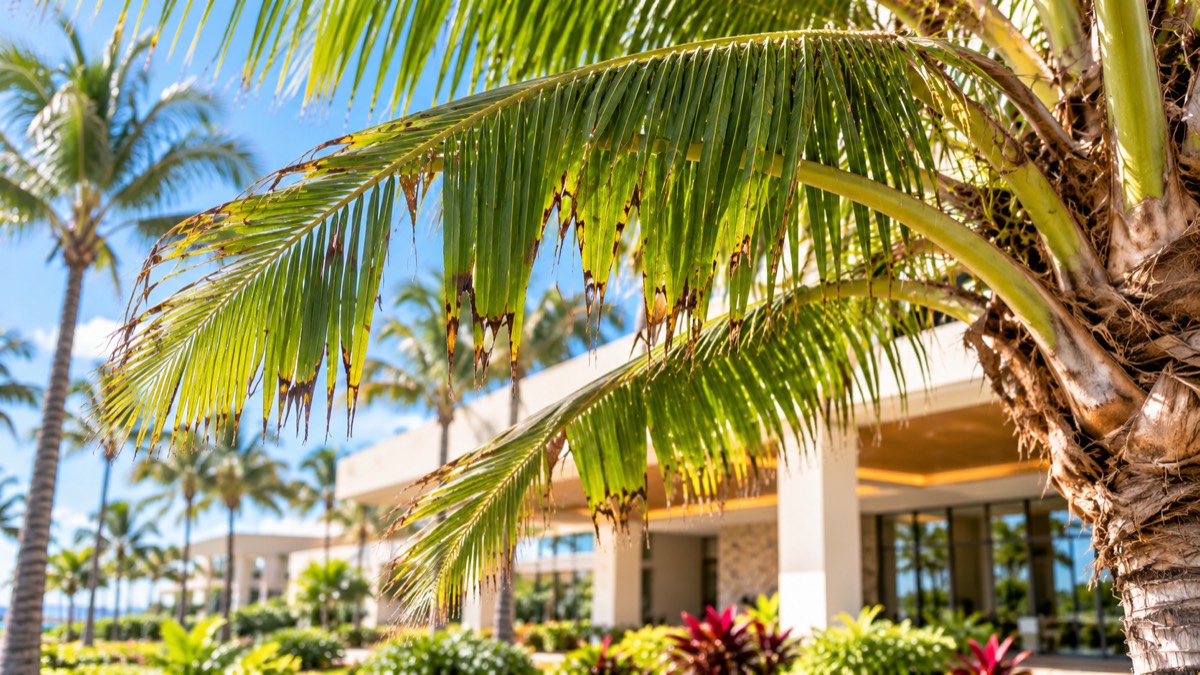
Early identification helps property managers investigate suspected CRB activity before extensive damage develops. According to the University of Hawaii's CRB identification guidance, the most recognizable symptoms involve damage to the crown and emerging fronds.
Look for these warning signs:
- V-shaped cuts in palm fronds: Feeding damage becomes visible when previously folded leaves unfold.
- Bore holes and fibrous debris: Openings or shredded plant fibers around the crown may indicate beetle activity.
- Distorted new growth: Emerging fronds may appear torn, uneven, or damaged.
- Declining crown health: Severe feeding can interfere with new growth and may contribute to palm death.
Not every damaged palm has a CRB infestation. Nutrient deficiencies, environmental stress, and other pests can cause similar symptoms, making accurate identification important before selecting treatment.
For commercial properties, we recommend documenting suspicious damage with photographs and noting which palms are affected. Pay particular attention to palms near building entrances, walkways, and parking areas, as well as landscape zones where green waste accumulates. Suspected sightings can also be reported through Hawaii's 643-PEST reporting system.
Commercial CRB Treatment Options
Effective CRB management involves protecting susceptible palms while addressing conditions that allow new beetles to develop. At Pacific Island Landscape, our CRB treatment services include injection and soil drenching, with the appropriate approach depending on the palm's condition, treatment product, and site requirements.
Injection treatment introduces an appropriate systemic product directly into the palm, allowing it to move through plant tissues. Depending on the product and application requirements, this method may help protect susceptible areas from beetle feeding.
Soil-drenching treatment involves applying a treatment around the root zone, where certain systemic products can be absorbed through the roots. Its suitability depends on the palm species, product labeling, and environmental conditions.
Neither method guarantees complete eradication, and existing feeding damage will remain visible after treatment. Monitoring newly emerging fronds can help determine whether additional activity is occurring and whether further management is necessary.
Why Breeding-Site Management Matters
Palm treatment alone cannot eliminate every source of CRB activity. Beetles may continue developing in decaying vegetation elsewhere on a property, making responsible debris management an important part of prevention.
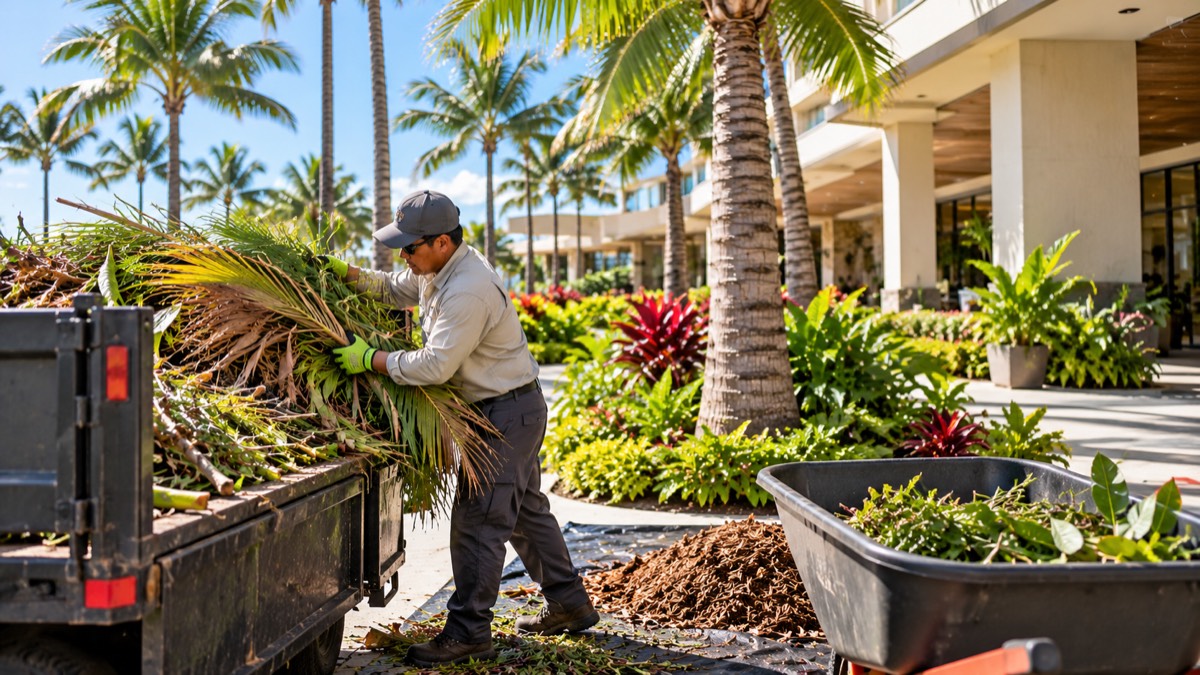
Our commercial landscaping services include debris removal involving branches, clippings, stumps, and other landscape waste. However, suspected CRB-infested material requires specific handling to avoid spreading live beetles or larvae. Property managers should follow current Hawaii CRB management and disposal guidance before moving potentially infested material.
CRB Prevention Strategies for Oahu Businesses
Preventive landscape maintenance can help reduce conditions that support beetle reproduction while making it easier to recognize new palm damage. Commercial property managers should prioritize the following practices:
- Manage green waste consistently. Avoid leaving dead palm fronds, clippings, and decomposing vegetation in unmanaged piles. CRB larvae can develop in organic material over several months, making neglected waste areas potential breeding sites. Suspected infested material should be handled according to current state guidance.
- Maintain mulch and compost areas. Large, moist piles may provide favorable breeding conditions. Where appropriate, spreading suitable organic material thinly rather than allowing deep accumulations can encourage drying. Properties storing bulk mulch or operating compost areas should follow relevant CRB best management practices.
- Inspect palms and incoming materials. Check susceptible palms for new feeding damage and examine landscape materials, particularly mulch, compost, and palm plants, for possible beetle activity. Keeping photographic records can help maintenance teams track changes over time.
- Consider plant selection during renovations. Coconut palms and several other palm species are vulnerable to CRB. Incorporating suitable non-host plants into future landscape improvements may reduce dependence on susceptible species while maintaining the property's intended appearance.
These practices do not eliminate the possibility of CRB arriving from neighboring properties, but they can help businesses manage avoidable breeding conditions and make informed decisions about palm care.
CRB Treatment vs. Palm Replacement
Finding CRB damage does not automatically mean a palm needs to be removed. Some affected palms may continue growing after appropriate treatment, while others may experience severe crown damage or develop conditions that require additional evaluation. The decision should consider the palm's current health, treatment suitability, and the costs associated with ongoing maintenance.
When comparing treatment with replacement, property managers should consider:
- Damage severity: Is the crown still producing healthy new growth, or has feeding caused extensive deterioration?
- Treatment suitability: Are appropriate treatment methods available for the affected palm and property conditions?
- Location and safety: Is the palm near a heavily used walkway, entrance, or parking area where structural concerns require professional evaluation?
- Long-term costs: How do treatment and monitoring compare with removal, disposal, replanting, and establishment expenses?
Replacing a mature palm can involve substantial work, but treatment also carries costs and does not guarantee recovery. A qualified arborist should evaluate palms with potential structural hazards before decisions are made about retaining or removing them.
Choosing a Commercial CRB Treatment Provider on Oahu
Commercial CRB treatment requires consideration of both palm health and the surrounding landscape. When evaluating providers, ask how they determine treatment suitability, what products and methods they propose, and whether follow-up monitoring may be necessary. It is also important to understand how suspected breeding material should be handled and which services are included in the estimate.
For properties with multiple buildings, extensive landscaped areas, or frequent maintenance activity, coordination matters. Treatment planning should account for access to affected palms, routine landscaping operations, and the need to minimize disruption to customers and tenants.
At Pacific Island Landscape, we offer CRB treatment alongside commercial landscape maintenance, debris removal, and plant disease control services. This allows property managers to discuss beetle concerns as part of their broader landscape care needs rather than viewing each issue in isolation.
Discuss Commercial CRB Treatment With Pacific Island Landscape
Coconut rhinoceros beetle damage can become a significant maintenance concern when affected palms and potential breeding sites are overlooked. Recognizing feeding symptoms, managing organic debris, and understanding available treatment options can help Oahu businesses make better decisions about protecting their commercial landscapes.
We provide commercial CRB treatment using injection and soil-drenching methods, supported by our broader landscaping and maintenance services. If you've noticed V-shaped cuts, damaged palm crowns, or other signs of possible CRB activity, we're available to discuss your property's needs.
Request a commercial landscaping estimate or call (808) 347-4462 to inquire about CRB treatment.